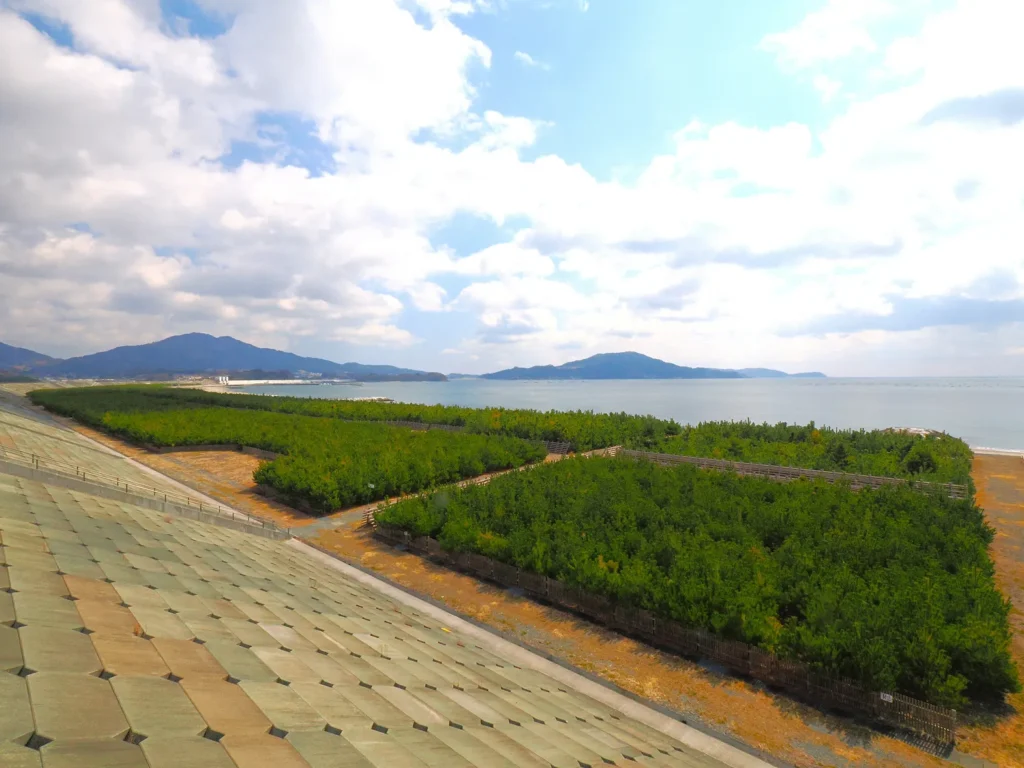
Black pine forests have been planted along coastlines throughout Japan to protect communities from waves and salty sea winds.
Coastal sandy soil is a harsh environment for plants, with limited water and nutrients. Fungal networks help pine trees survive even in these conditions.
Fungal hyphae form networks that gather water and nutrients over a wide area. They also surround the roots like a protective “sock,” helping shield the trees from pathogens and other threats.
In 2011, the massive tsunami triggered by the Great East Japan Earthquake swept away the approximately 70,000 pine trees of Takata Matsubara in Rikuzentakata, Iwate Prefecture.
Only one particularly large tree survived. It became known as the “Miracle Pine.”
Today, new pine trees are being planted and nurtured at the site. Beneath the ground, new mycorrhizal relationships will surely be forming, with fungal hyphae beginning their vital work once again.