Get an overview of the exhibits and discover their highlights.
Prologue
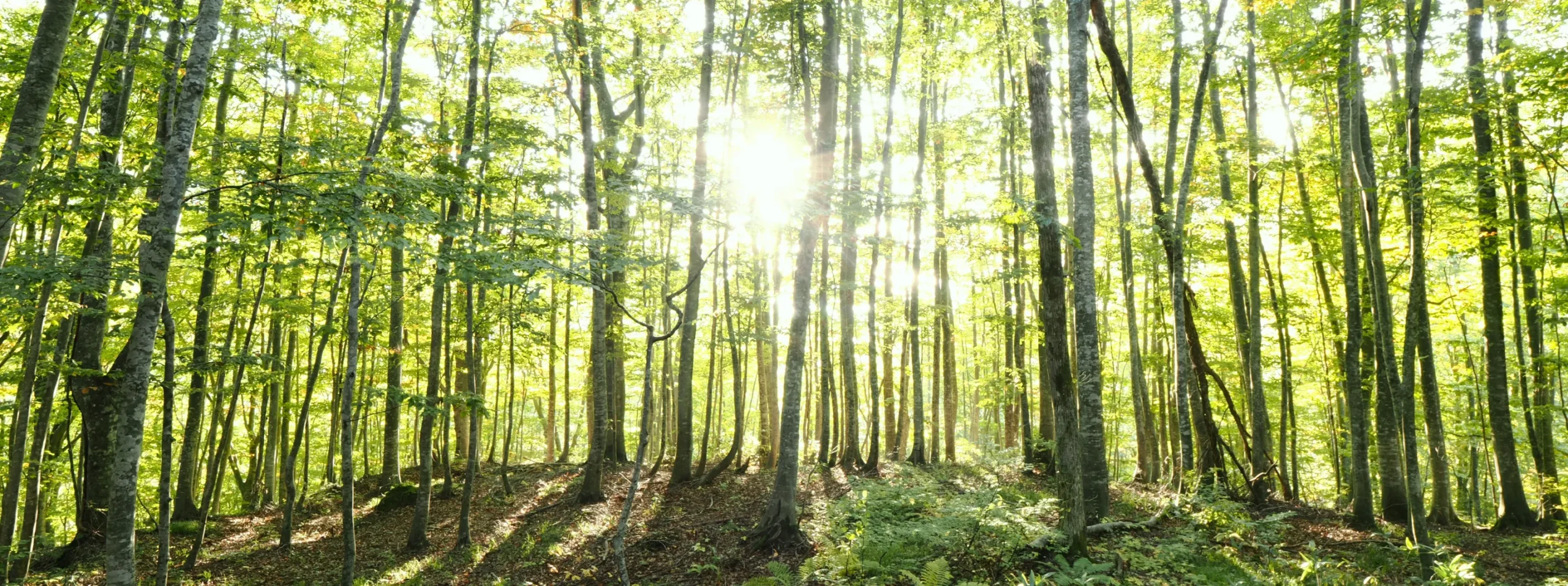
Earth is a planet of plants.
Invisible. Unfelt. Unnoticed.
A journey into the hidden world of plants begins.
ZONE1
A World Under the Forest
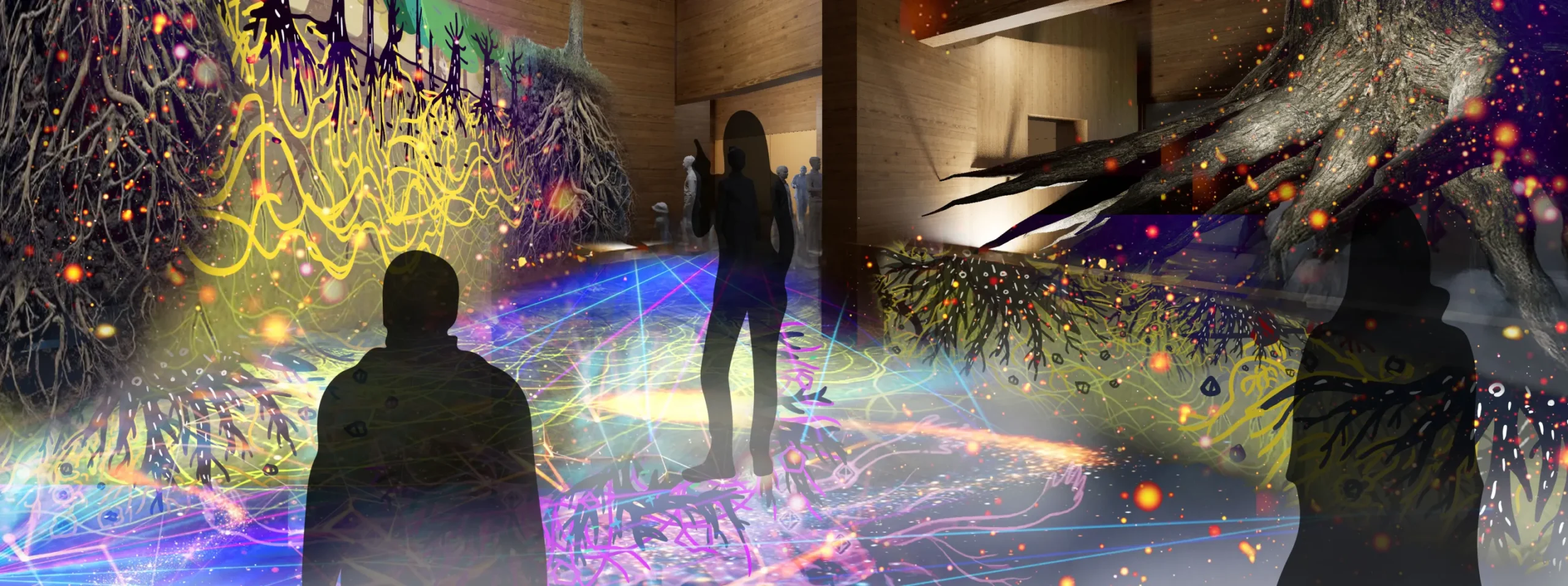
Plants cannot obtain all the nutrients and water they need from their roots alone.
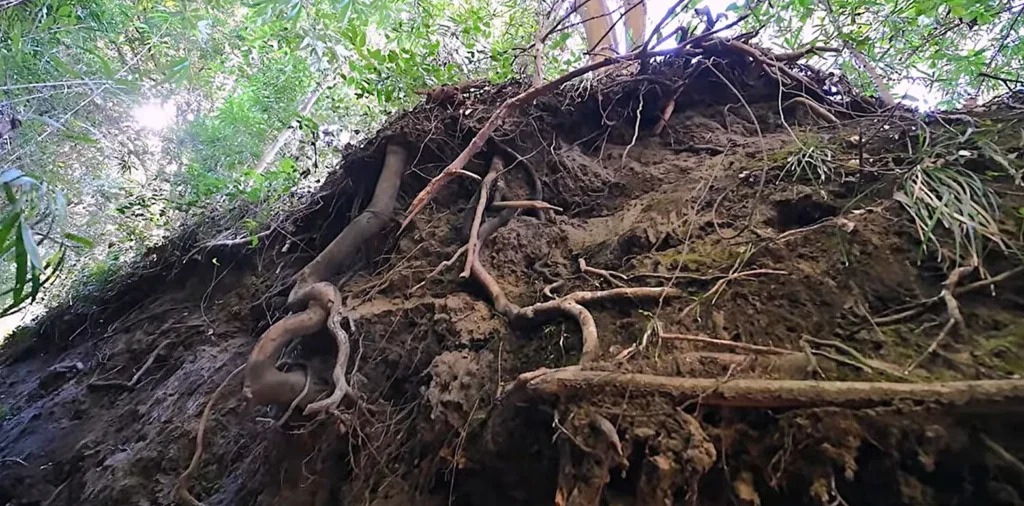
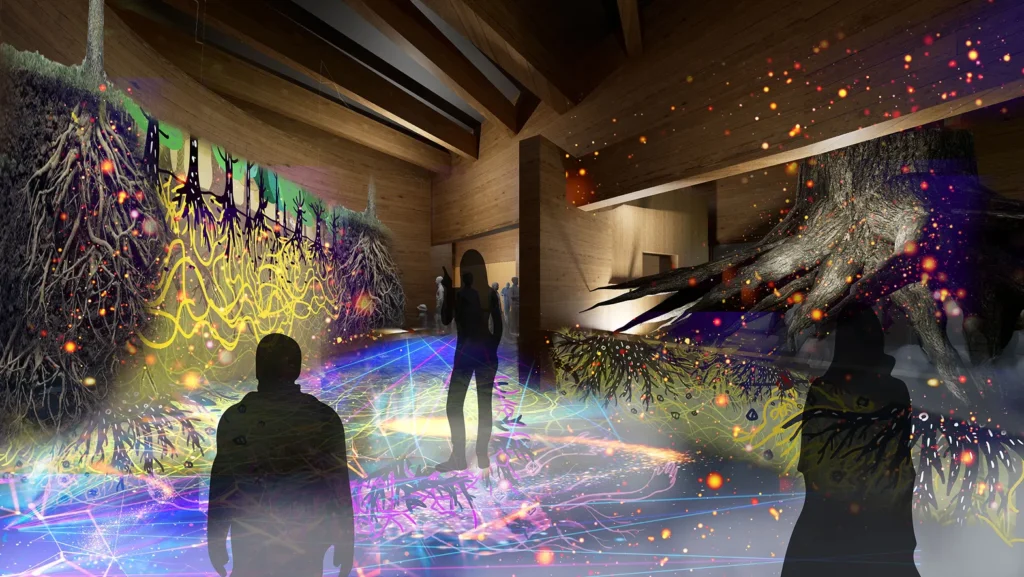
Their powerful partners are fungi. Beneath our feet lies a vast world of fungal networks that connect with plant roots.
ZONE2
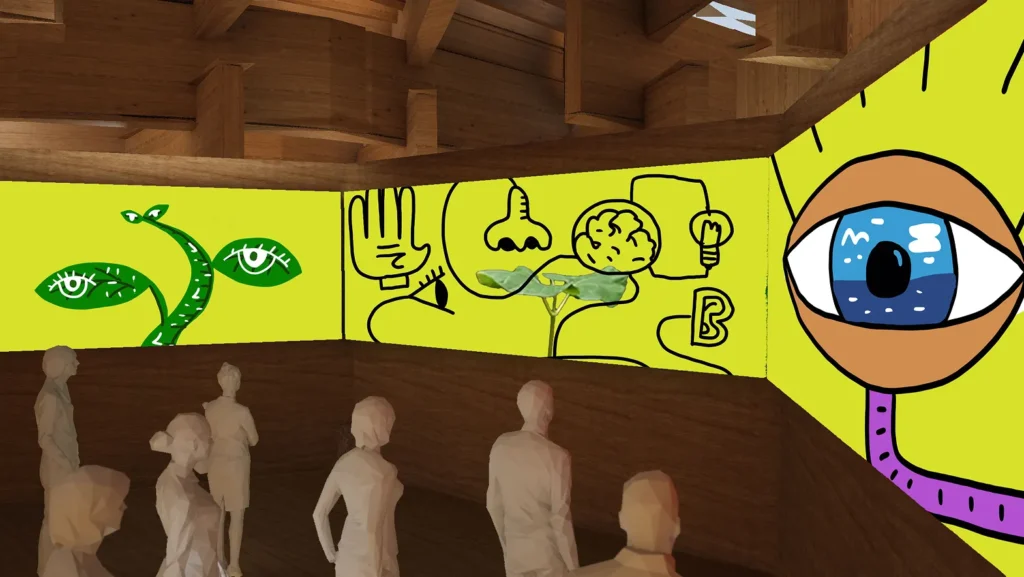
The Forest of Hidden Worlds
There are as many worlds as there are living beings. This is the concept of Umwelt—the unique world as perceived by each organism.
Come and “see” the secret messages plants send to other living beings.
ZONE3
Discoveries in the Forest
Some plants are struggling right alongside our everyday lives.
Their stories have invited you into this forest.
ZONE4
Our Connections to Plants
All human life is connected—with plants at the heart of it all.
How are we, as human beings, connected to plants today?
Journey from the past to the present, and onward into stories of the future.
Epilogue
Toward the future—what you and plants can do together.
ZONE1A World Under the Forest
A Hidden Forest Beneath Our Feet
Small creatures such as pill bugs, springtails, and earthworms break down organic matter like fallen leaves and dead plant material. Bacteria and other microorganisms then break down what remains, including their waste, using enzymes and other processes. This releases essential nutrients such as nitrogen and phosphorus into the soil, making them available to plants.
ZONE1A World Under the Forest
Can Plants Really Gather Nutrients and Water on Their Own?
Fungal hyphae can extend much farther through the soil than plant roots, allowing them to gather nutrients and water over a wider area. This is highly beneficial to plants. In return, plants provide fungi with energy-rich nutrients produced through photosynthesis. It is a mutually beneficial relationship—a form of symbiosis that helps both partners adapt to their environment.
ZONE1A World Under the Forest
Roots Wrapped in “Socks”? Meet Mycorrhizae
The structures formed through the close association of plant roots and fungi are called mycorrhizae. One of the oldest types is arbuscular mycorrhizae (AM), also known as endomycorrhizae, in which fungal hyphae enter the root and form connections within its tissues.
It is thought that the ancestors of plants that first moved from the oceans onto land developed this relationship to obtain nutrients and water.
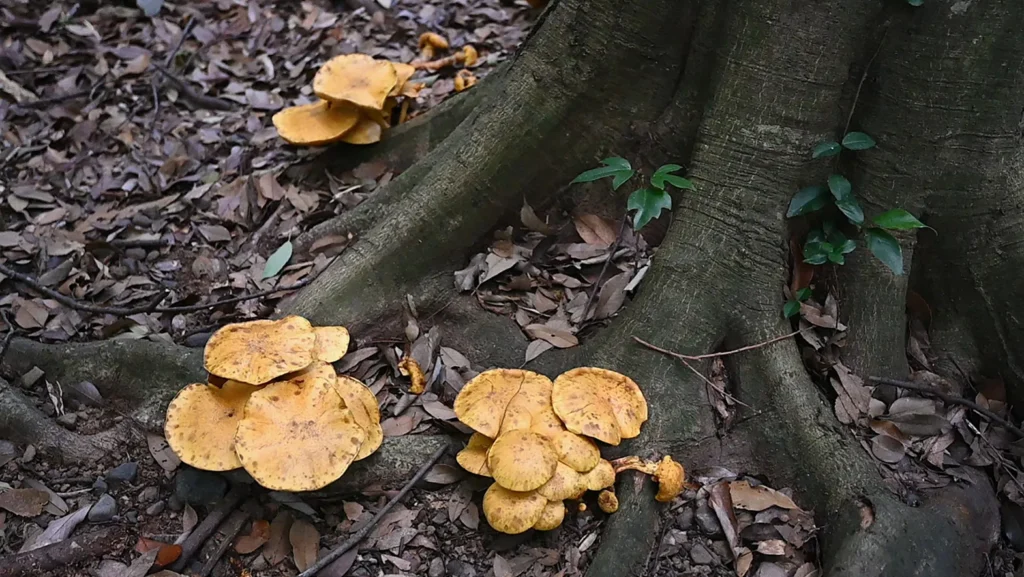
By contrast, fungi that form ectomycorrhizae surround the outside of plant roots with a sheath of fungal hyphae. This is often compared to a “sock” wrapped around the root. Another characteristic of ectomycorrhizal fungi is that they produce mushrooms. The fungi that form arbuscular mycorrhizae produce neither these root sheaths nor mushrooms. Which type of mycorrhizal relationship a plant forms is largely determined by the plant species. The type of forest itself is also closely connected to these underground partnerships.
ZONE1A World Under the Forest
Fungi Build Underground Networks
Fungal hyphae spreading through the soil from mycorrhizae can connect with hyphae associated with other plants of the same type. Plants that appear to live separately above ground can therefore be connected underground through vast networks of fungal hyphae. For example, energy-rich nutrients produced through photosynthesis by a large tree can flow into these networks and be used by other plants.
This is one reason why orchids, which have limited photosynthetic ability, and plants such as Monotropastrum that do not photosynthesize can grow in forests: they can obtain energy and nutrients produced through photosynthesis by other plants via these fungal networks.
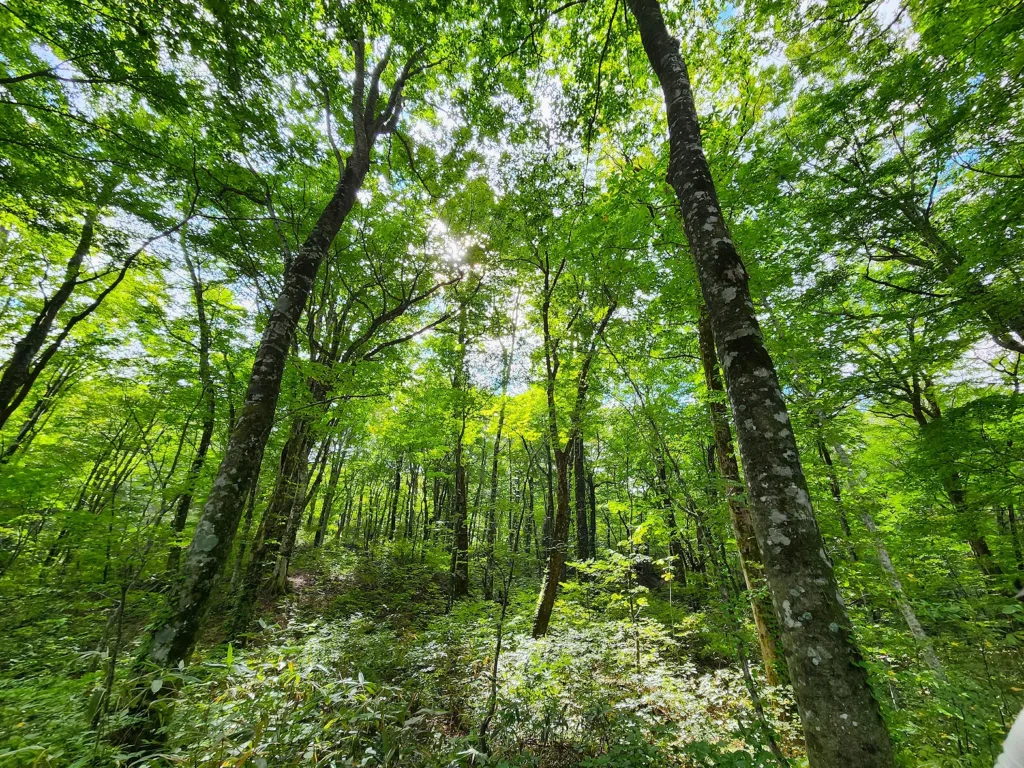
Underground fungal networks help sustain the forests we see above ground.
ZONE1A World Under the Forest
The Fungal Story Hidden in the “Miracle Pine”
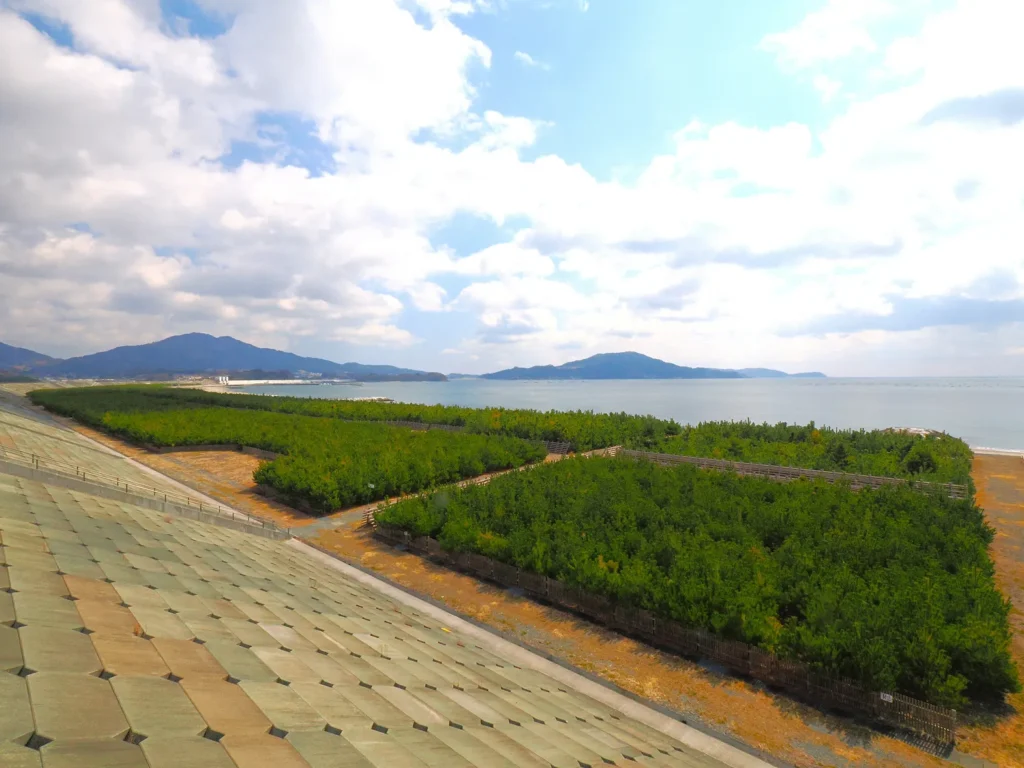
Black pine forests have been planted along coastlines throughout Japan to protect communities from waves and salty sea winds. Coastal sandy soil is a harsh environment for plants, with limited water and nutrients. Fungal networks help pine trees survive even in these conditions.
Fungal hyphae form networks that gather water and nutrients over a wide area. They also surround the roots like a protective “sock,” helping shield the trees from pathogens and other threats.
In 2011, the massive tsunami triggered by the Great East Japan Earthquake swept away the approximately 70,000 pine trees of Takata Matsubara in Rikuzentakata, Iwate Prefecture. Only one particularly large tree survived. It became known as the “Miracle Pine.”
Today, new pine trees are being planted and nurtured at the site. Beneath the ground, new mycorrhizal relationships will surely be forming, with fungal hyphae beginning their vital work once again.
ZONE2The Forest of Hidden Worlds
The “Invisible” Communication of the Forest
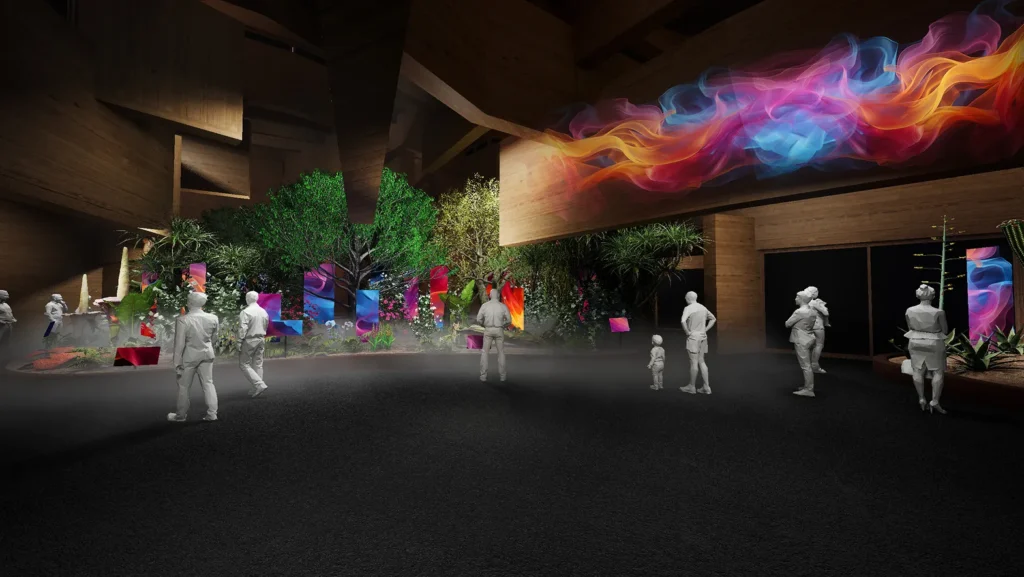
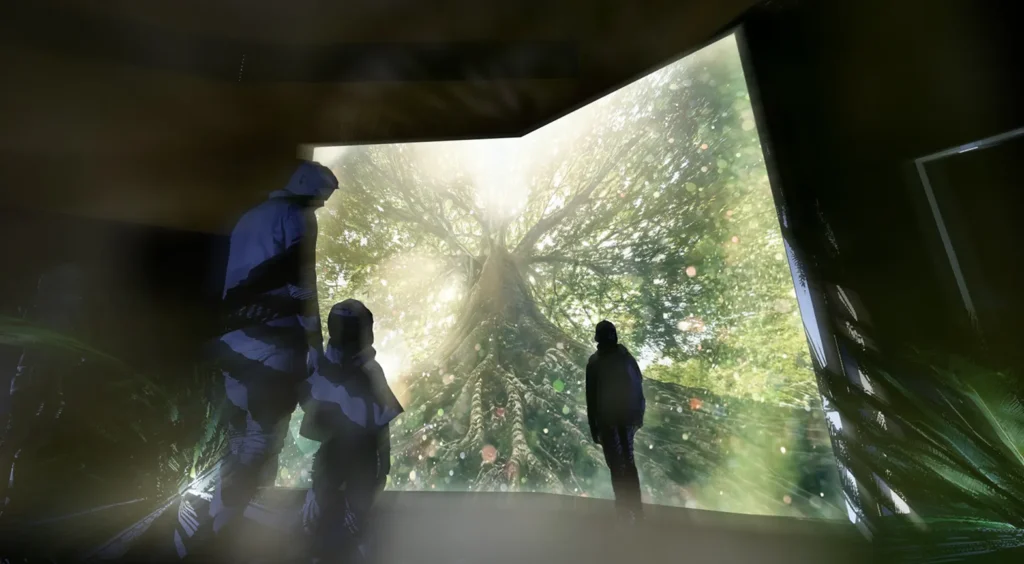
Plants and animals communicate with one another in many lively and complex ways that humans cannot perceive. In this zone, we explore how various signals produced by plants—including scents and colors—might be perceived by other living beings, using visual expressions inspired by how they sense the world. Imagine the worlds of different plants and the lives unfolding within them.
ZONE2The Forest of Hidden Worlds
Plants from Around the World Come Together as One Forest
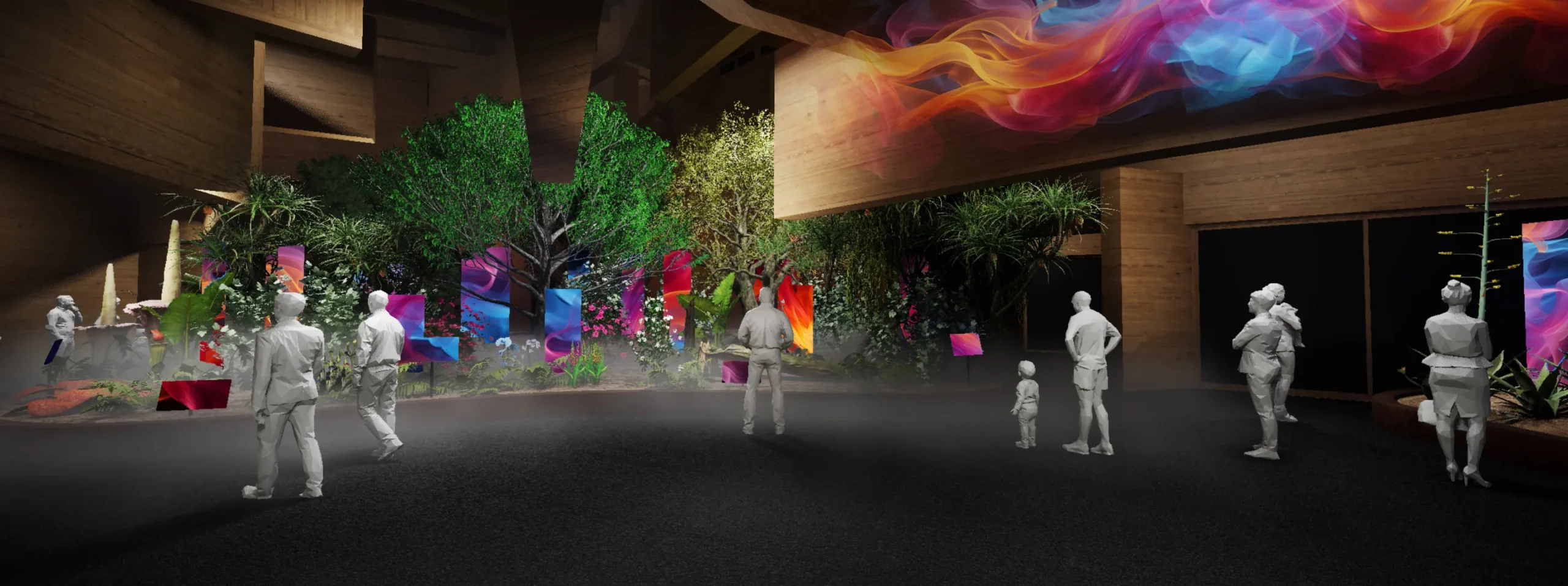
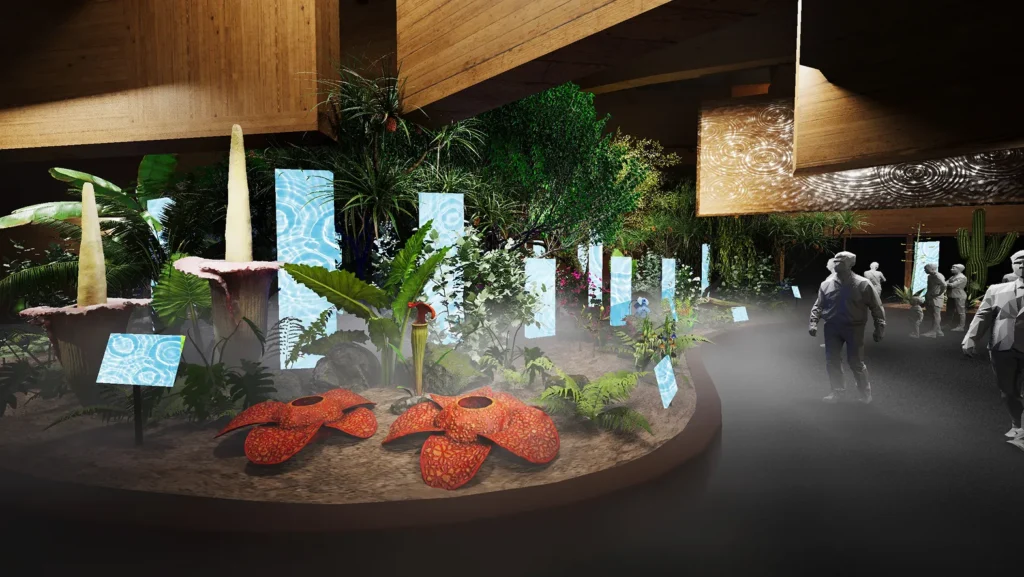
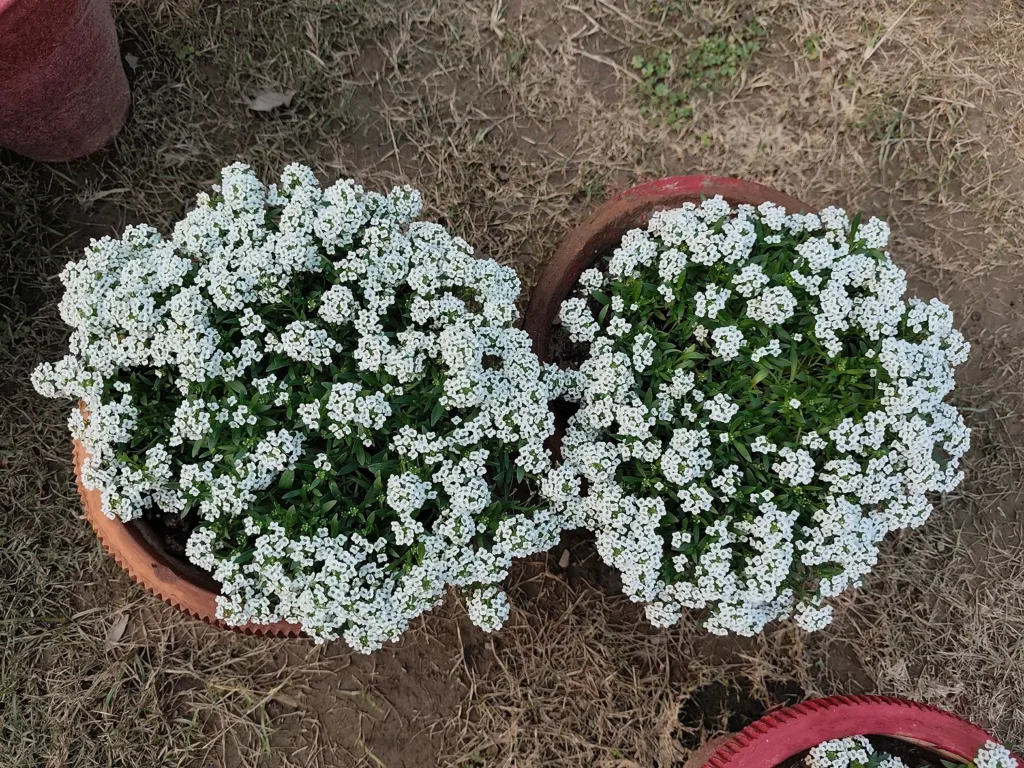
A banyan tree with an impressive root system, a subtropical evergreen forest rising more than five meters high, and flowers in a dazzling array of colors.
From tropical rainforests in Central America to Japan’s evergreen forests, plants from diverse environments around the world come together in an extraordinary large-scale indoor planting area unlike any other. Some plants that cannot be transported from their native habitats are represented by highly detailed, life-size models, including the parasitic Rafflesia and Balanophora, as well as the titan arum, sometimes called the world’s largest flower. The latest technology has been used to create these models, including 3D scanning of actual plants.
Experience a forest where living plants and remarkably realistic models come together—and discover the world of communication between plants and other living beings that unfolds within it.
ZONE2The Forest of Hidden Worlds
The Umwelt Theater: Experience Plants’ Sense of Time and Perception
Plants are often thought to be unable to feel or sense their surroundings. Yet recent research has revealed that plants can perceive light, respond to touch, and detect scents.
Plants are also often considered immobile. But when we change our timescale, their movements become surprisingly visible, revealing behavior that can resemble animals.
Through animation and specially filmed footage, this theater offers an accessible way to explore how plants perceive their world, while comparing their senses and experience of time with those of humans.
ZONE3Discoveries in the Forest
The Hidden Reality of Familiar Plants
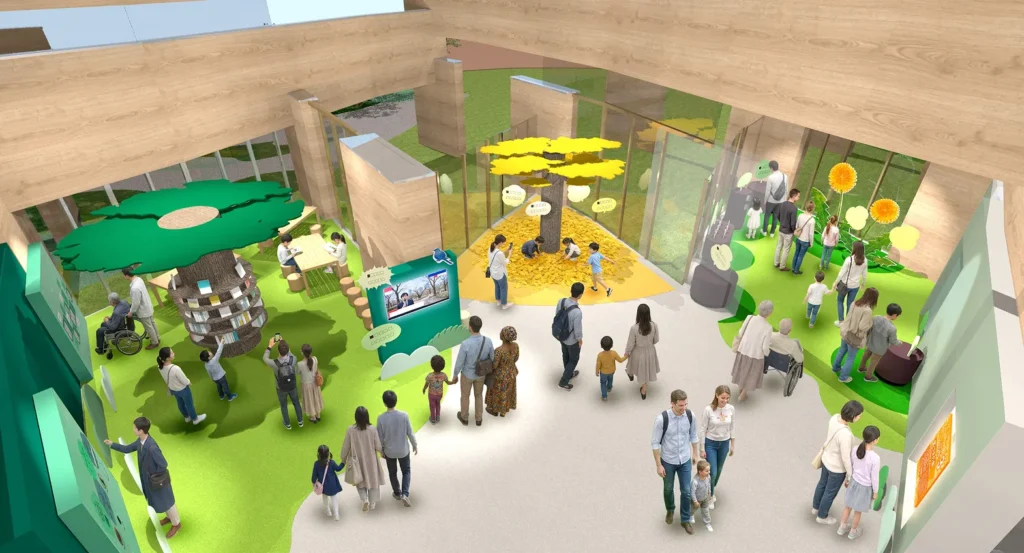
“The Forest of Awareness” is an experiential exhibition consisting of three areas.
Nippon Life Insurance Company
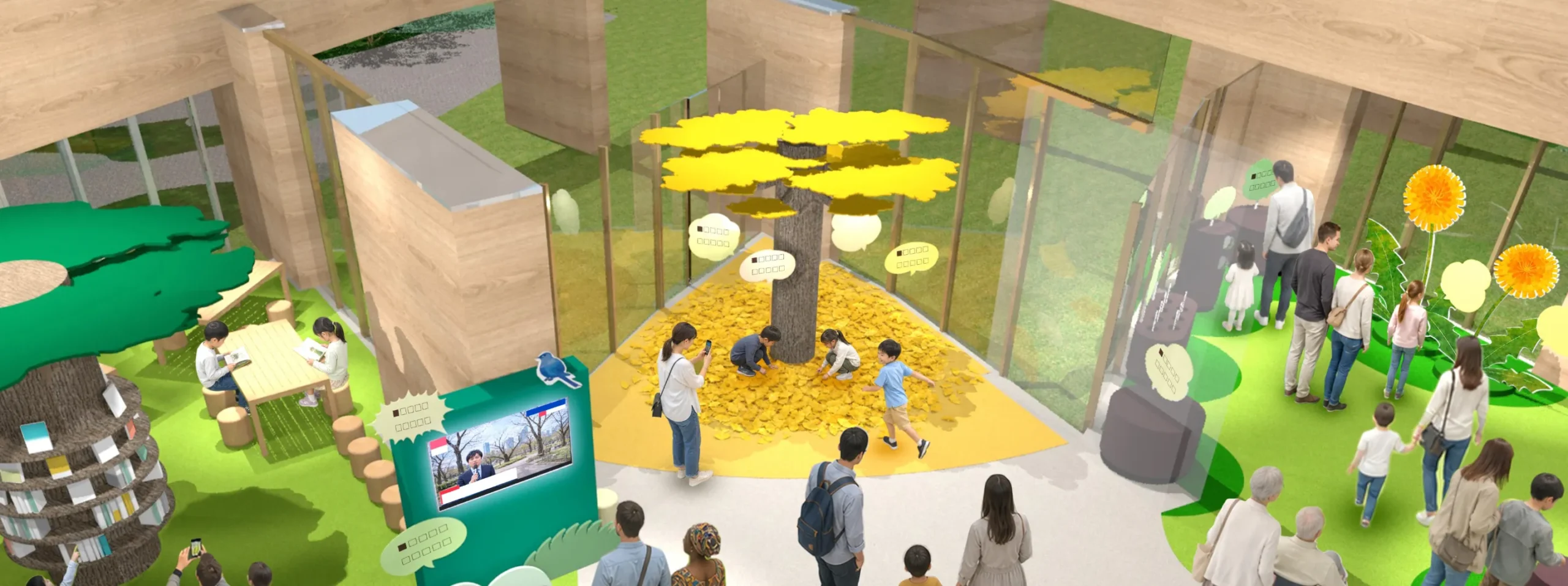
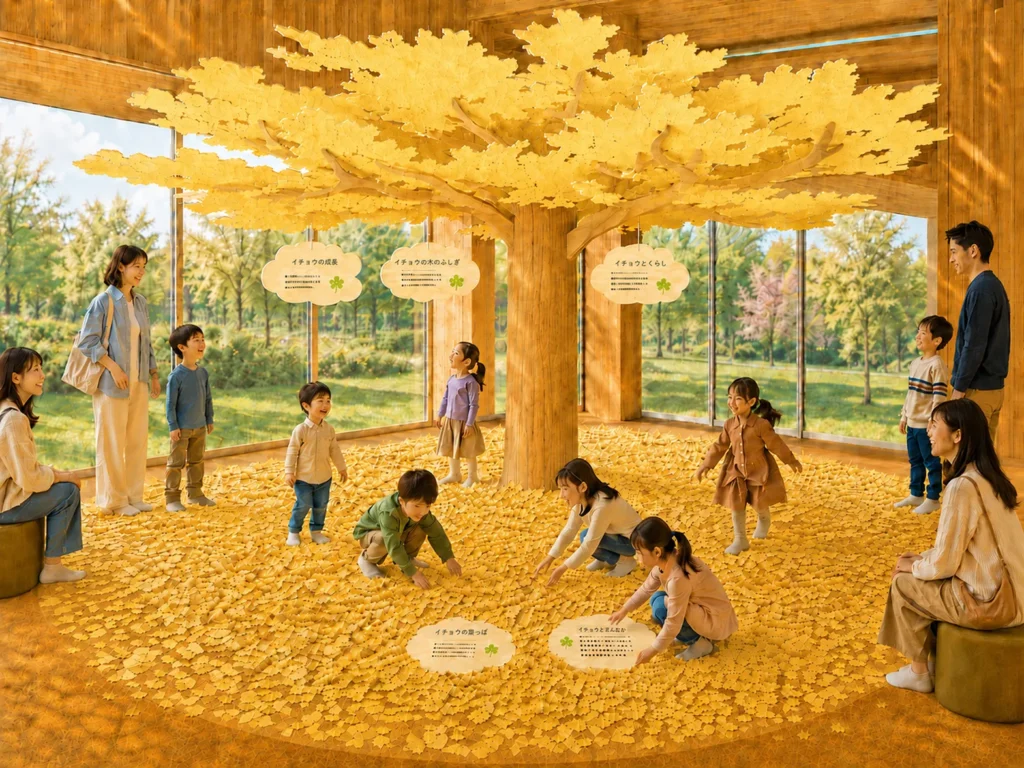
Each area introduces plants that may be familiar in everyday life yet face threats such as extinction. Through engaging messages and experiences that invite visitors to look closely and interact, the exhibition reveals the unexpected realities these plants face. Take the ginkgo tree, for example.
Ginkgoes have existed since ancient times, but most of the trees we see today have been cultivated. Wild ginkgoes are considered extinct. These lesser-known facts are presented through visual storytelling, such as leaves inspired by the ancient past hidden among fallen leaves, and information concealed within the foliage.
Ginkgo tree
Nippon Life Insurance Company
By sparking visitors’ curiosity and encouraging them to discover information for themselves, the exhibition aims to turn an understanding of the current situation facing plants into genuine interest and concern.
ZONE3Discoveries in the Forest
Discover the Hidden Plants of Our World
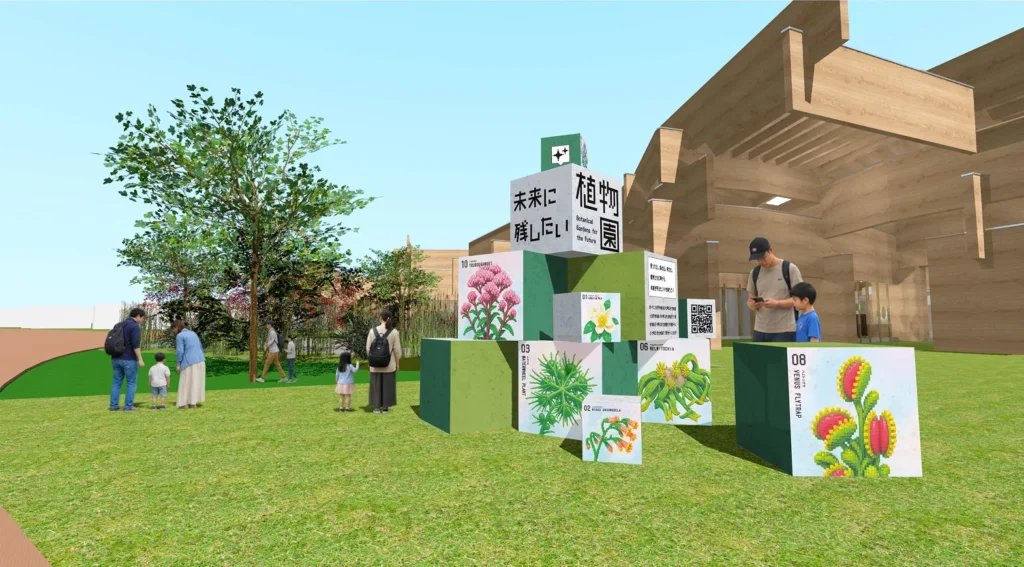
The outdoor area introduces a diverse range of plants as a “botanical garden for the future,” including plants from around the world that face the threat of extinction.
Outdoor area concept image
Nippon Life Insurance Company
Visitors can use their smartphones or other devices to scan QR codes hidden within unique installations for each plant, revealing information about its current situation and messages about its future.
Visitors can also collect the plants they discover in their own illustrated guide, combining the fun of a stamp rally with opportunities to learn about environmental issues. Find. Learn. Collect. Through this experience, visitors can continue thinking about environmental challenges and discover ways to turn that awareness into action.
ZONE4Our Connections to Plants
Step into a Giant Book of Stories Between Plants and People
Plants provide abundant gifts to people in every region of the world. From food, clothing, and shelter to comfort and healing for the mind and body, human life has always been sustained by the many gifts of plants. Walk through a tunnel of pages and experience the richness of what plants provide.
ZONE4Our Connections to Plants
Plants—and Our Planet—Are in Danger
The destruction of forests, explosive population growth, pollution of the atmosphere and oceans, climate change, and the collapse of ecosystems…
Since the Industrial Revolution, human activities driven by the pursuit of greater prosperity have been causing changes on a global scale. These changes are pushing us toward the limits of Earth’s capacity to support human life—what scientists describe as the Planetary Boundaries.
ZONE4Our Connections to Plants
The Power of Plants to Create “Tomorrow’s Landscape”
Nature-based Solutions are approaches that use the power of nature to address social and environmental challenges. This exhibition introduces initiatives by people using plants and natural systems to restore the environments around us, as well as new technologies inspired by nature to help protect the global environment.
ZONE4Our Connections to Plants
Seed Paper®: Recycled Paper That Blooms
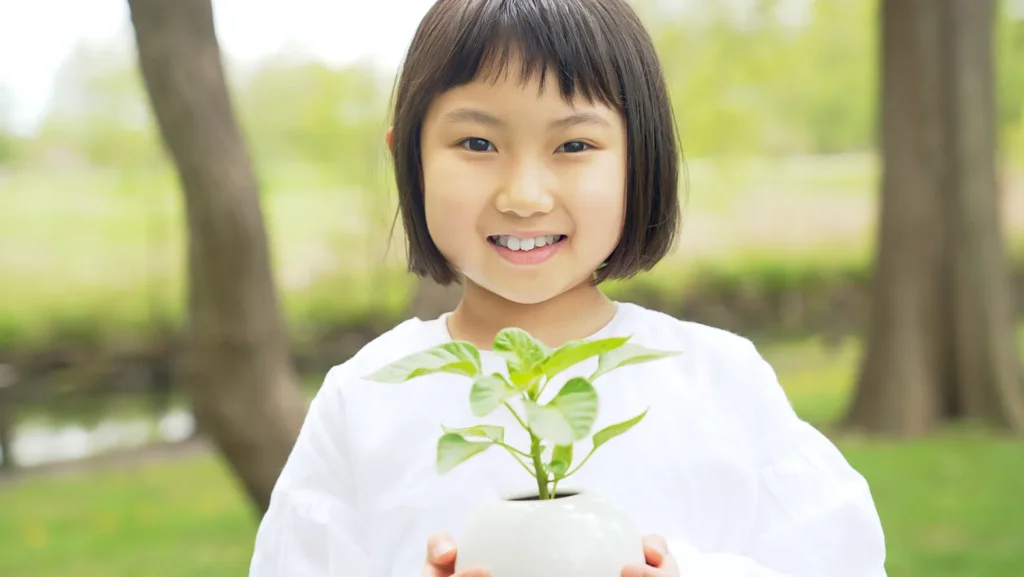
At the Theme Pavilion, visitors will receive Seed Paper®, recycled paper that blooms into flowers.
Seed Paper® is made from recycled paper collected from offices, stores, and other sources, with plant seeds embedded directly into the paper. What might change when tens of thousands of “you” grow a flower?
Take photographs as your Seed Paper® grows and share them on the official website. Your photographs will help grow the Theme Pavilion’s symbolic “Tree of Hope.”
ZONE4Our Connections to Plants
Growing the “Tree of Hope” Together
Photograph your Seed Paper® as it grows and share your images as many times as you like. The more photographs are shared, the richer and more vibrant the “Tree of Hope” will become.The experience of growing the “Tree of Hope” together may inspire us to think about a new relationship between plants and people.
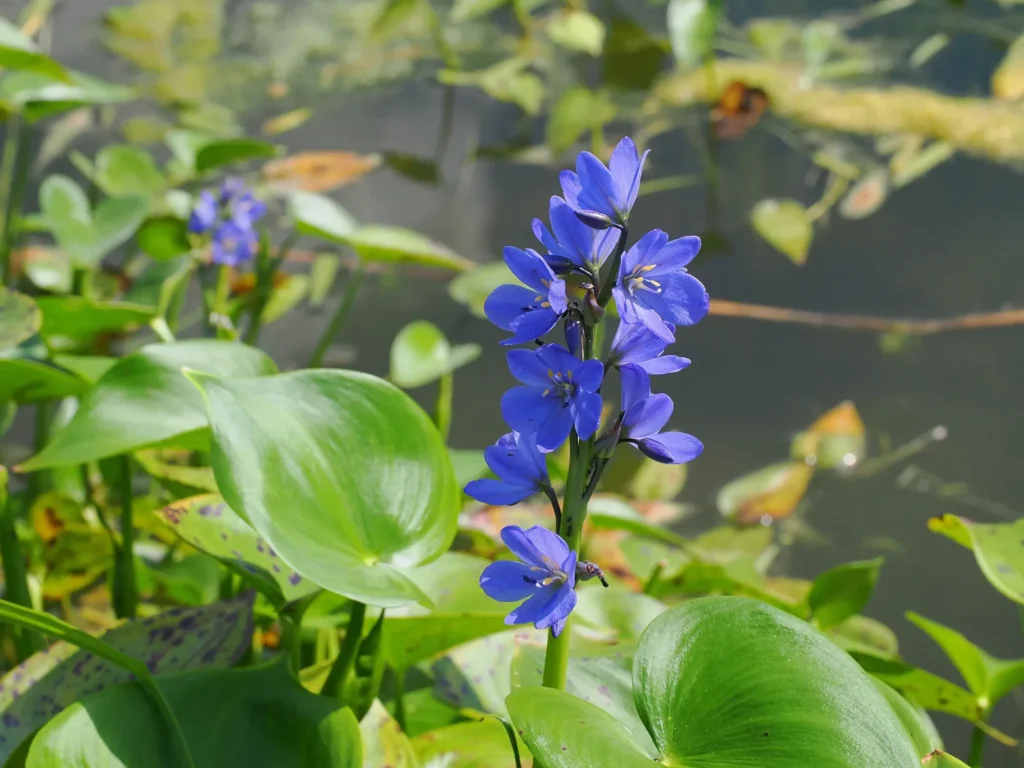
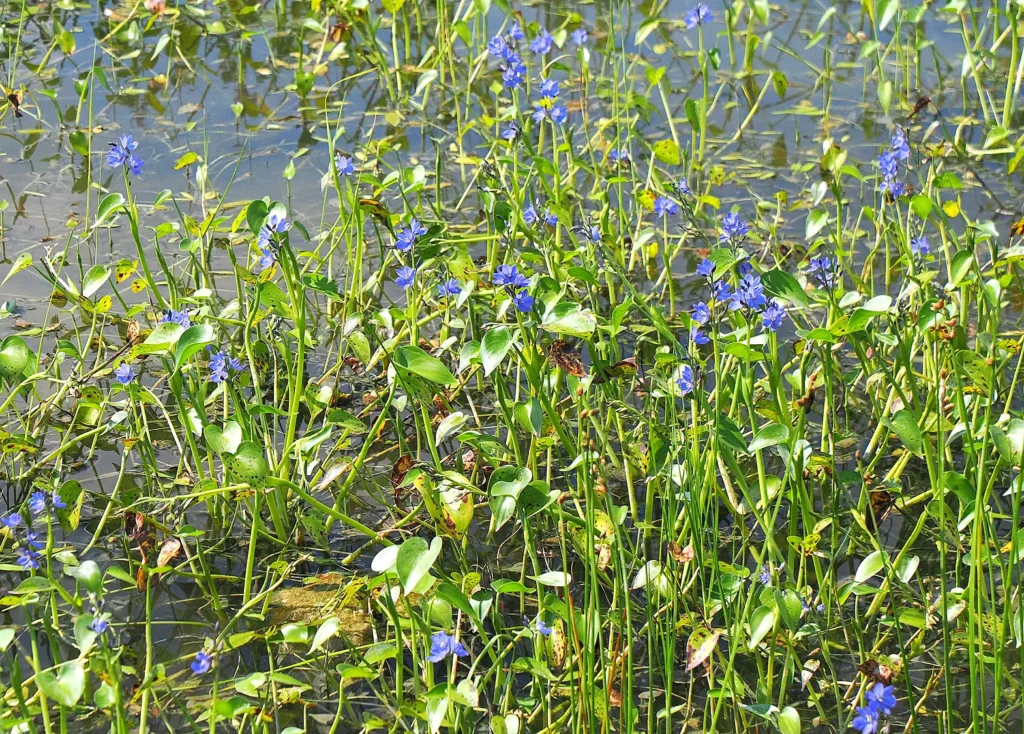
A Sea of Blue Flowers Emerges from the Scars of the Tsunami
In 2011, the Great East Japan Earthquake caused devastating damage, particularly across the Tohoku region. That summer, along various sections of coastline struck by the tsunami, masses of water poppies (Monochoria korsakowii) suddenly burst into bloom. Once commonly found in rice paddies and other wetlands, the water poppy was once regarded as a symbol of Japan, the “land of abundant rice.” As rice paddies were reclaimed and agriculture modernized, however, the plant disappeared from people’s memories and became endangered.
Seeds that had lain dormant deep underground were brought to the surface by the tsunami, triggering their return to growth. Inspired by these blue flowers, local communities began efforts to preserve their story as part of the disaster’s memory and to protect the natural environment of their hometowns.
Epilogue
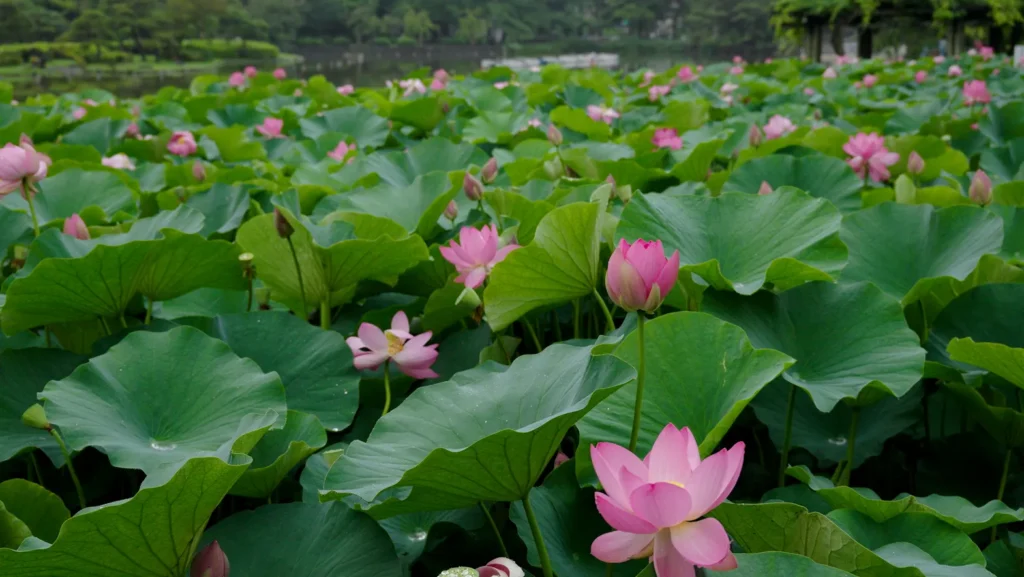
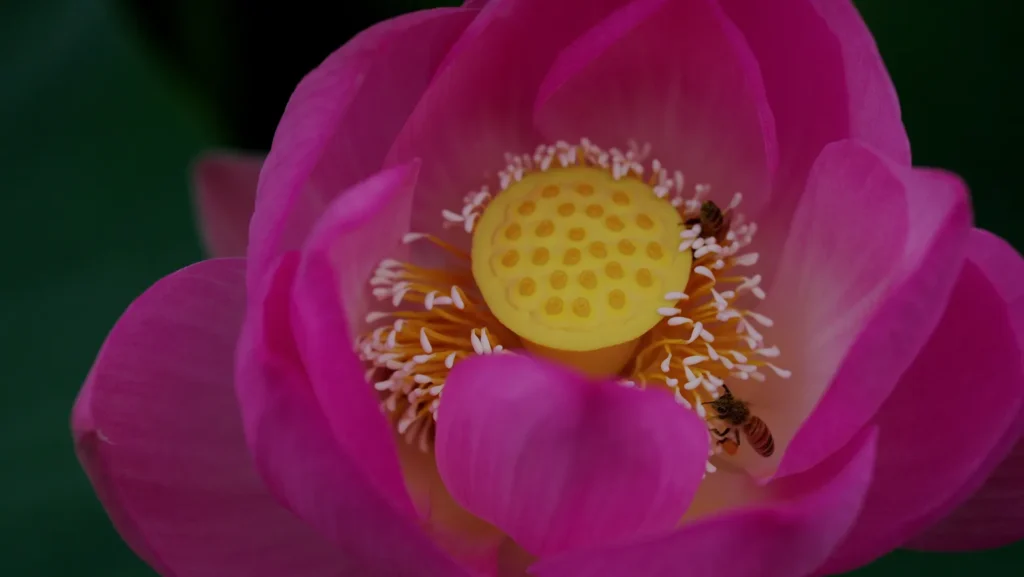
A Lotus That Bloomed After 2,000 Years
In 1951, lotus seeds were discovered in a layer dating back approximately 2,000 years during an archaeological excavation in Chiba City.
The ancient lotus was named “Ohga Lotus” after Dr. Ichiro Ohga, whose efforts played a key role in excavating the seeds.
After lying dormant for two millennia, the seeds miraculously bloomed, bringing hope and light to people rebuilding their lives in postwar Japan.
Epilogue
What Will You Do?
The lotus seeds first fell dormant 2,000 years ago, during the Yayoi period. At that time, people lived alongside abundant nature, with forests, mountains, rivers, and seas filled with countless forms of life.
Plants have transformed Earth into a planet of life over immense spans of time. Will we leave behind a world where flowers can still bloom?