
Inside Heroes
vol.6

Carrying a 450-Year Tradition into the Future
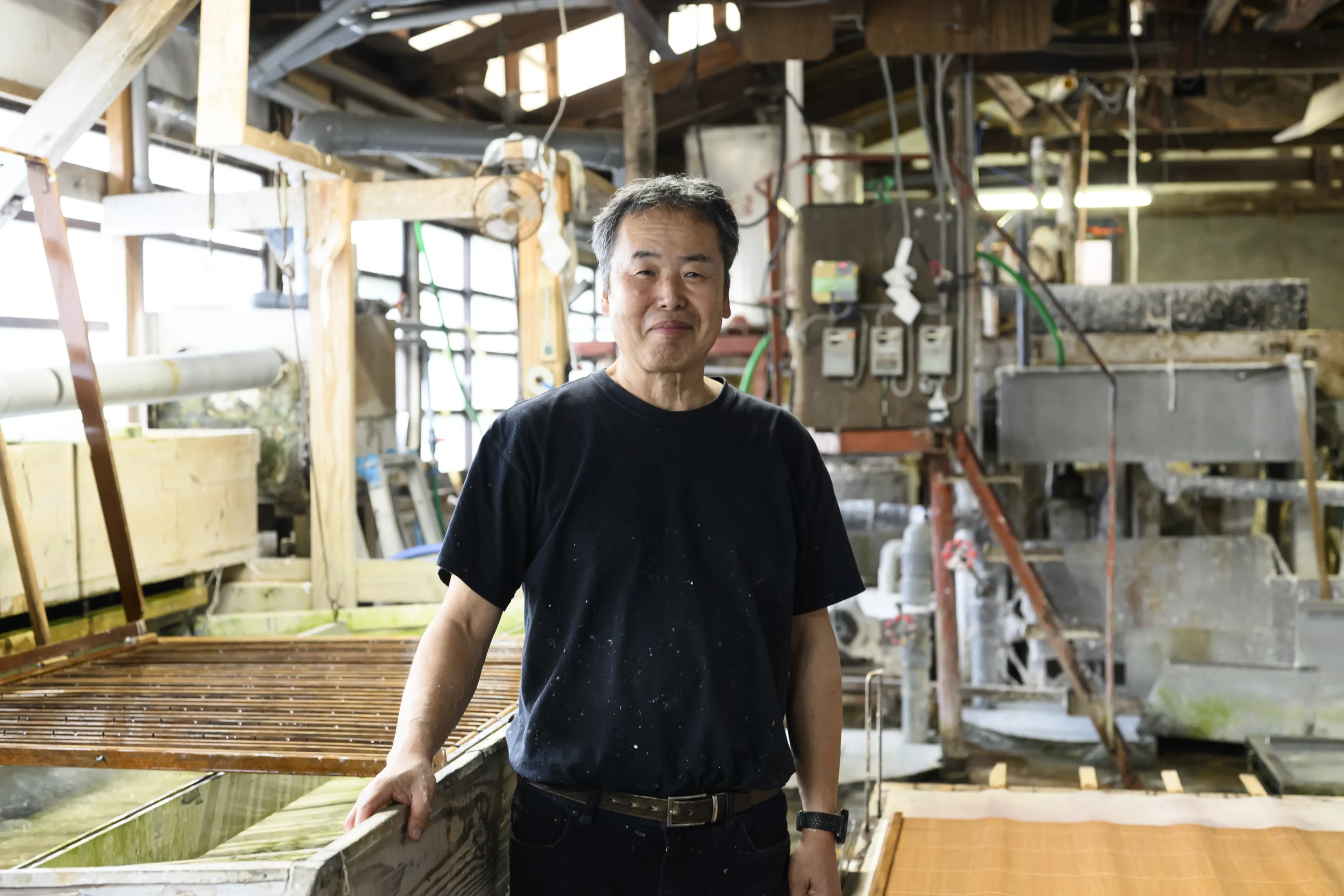
A Message to Our Visitors
Among those visiting GREEN×EXPO 2027, some of you will receive Seed Paper® handcrafted in Nishijima, a village renowned for its tradition of Japanese washi.
It may appear to be just a single sheet of paper, but with a little water, tiny shoots begin to emerge as if answering your care. Watching them gently lean together toward the sunlight is an unexpectedly moving experience.
My hope is that as many people as possible will experience that quiet sense of wonder for themselves.
With that wish in mind, we handcraft every single sheet with the utmost care.
The Story of Renewal Woven by Nishijima Washi
— Could you tell us about the history and distinctive qualities of Nishijima Washi?
Kasai:
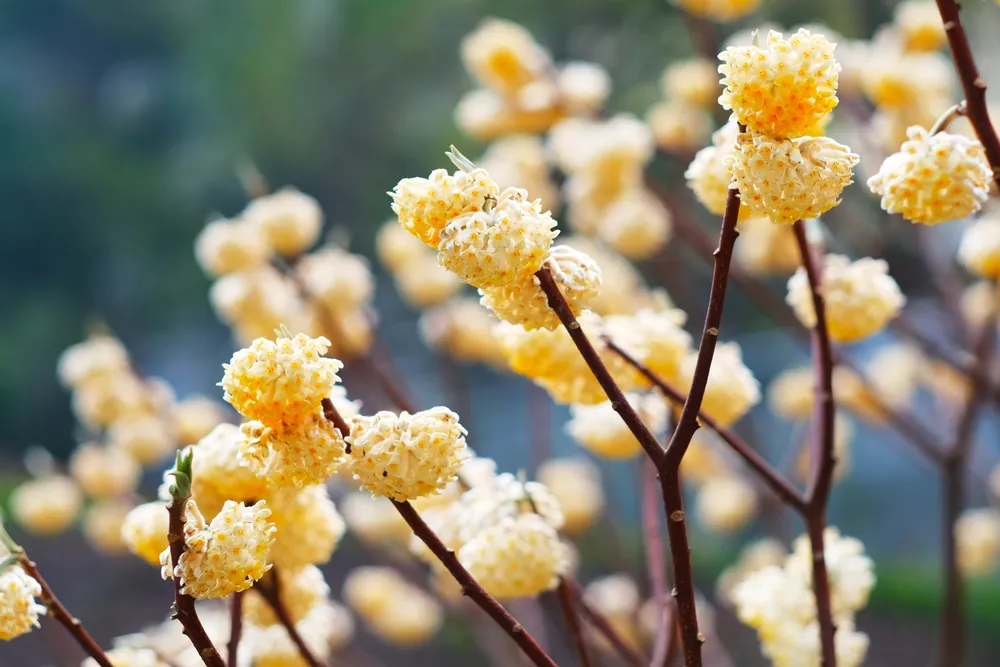
Nishijima was never well suited to agriculture, and for many years it was a very poor village. Its fortunes began to change when our predecessor, Seibei Mochizuki, returned from Shuzenji in Izu with the papermaking techniques he had learned there.
The washi produced in Nishijima, crafted from the fibers of the mitsumata shrub, was prized for its distinctive luster. It is said that even Takeda Shingen, the powerful feudal lord of the time, was captivated by its beauty.
After Seibei was appointed as an official papermaker, washi production flourished and grew into an industry that sustained the entire community.
However, Nishijima Washi reached a major turning point after the Second World War.
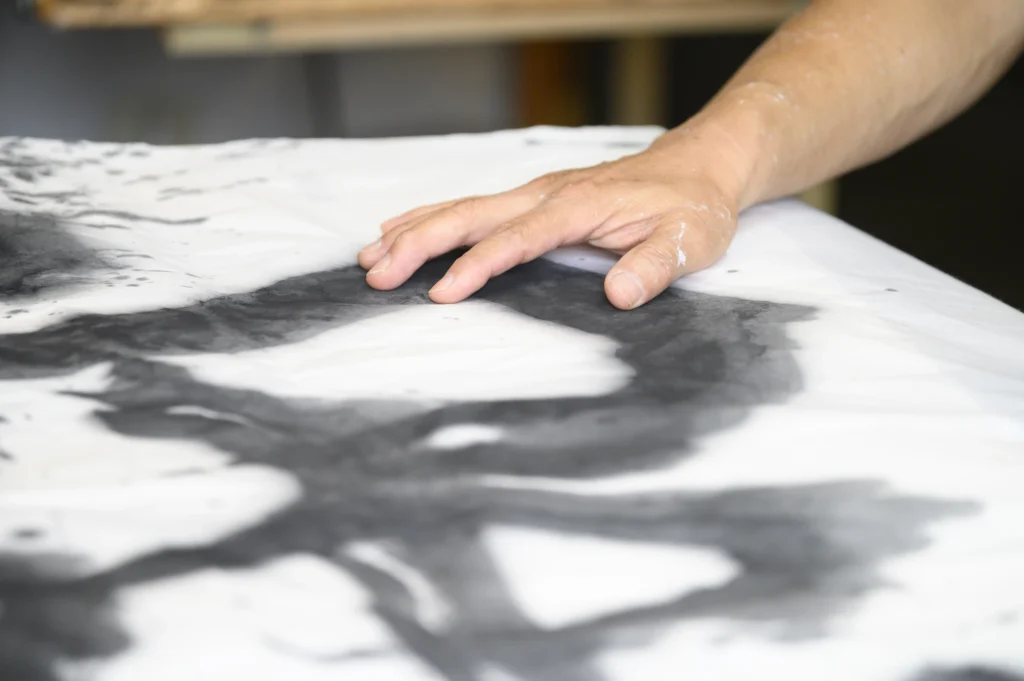
As imports of paper from overseas became increasingly difficult, the papermakers of the previous generation sought to meet the growing needs of calligraphers by producing large-format gasenshi—traditional paper for Japanese brush calligraphy.
Their goal was to create paper that could produce beautiful, expressive ink diffusion (nijimi), a defining characteristic of fine calligraphy.
After years of experimentation, they developed a distinctive manufacturing method using recycled paper with its oils thoroughly removed as the primary raw material. The result was a soft, highly absorbent paper that responded beautifully to the brush.
That innovation became the foundation of Nishijima Washi’s modern identity, and calligraphy paper remains the industry’s principal product to this day.
— We understand that your father introduced a major innovation in the production of calligraphy paper. Could you tell us about it?
Kasai:
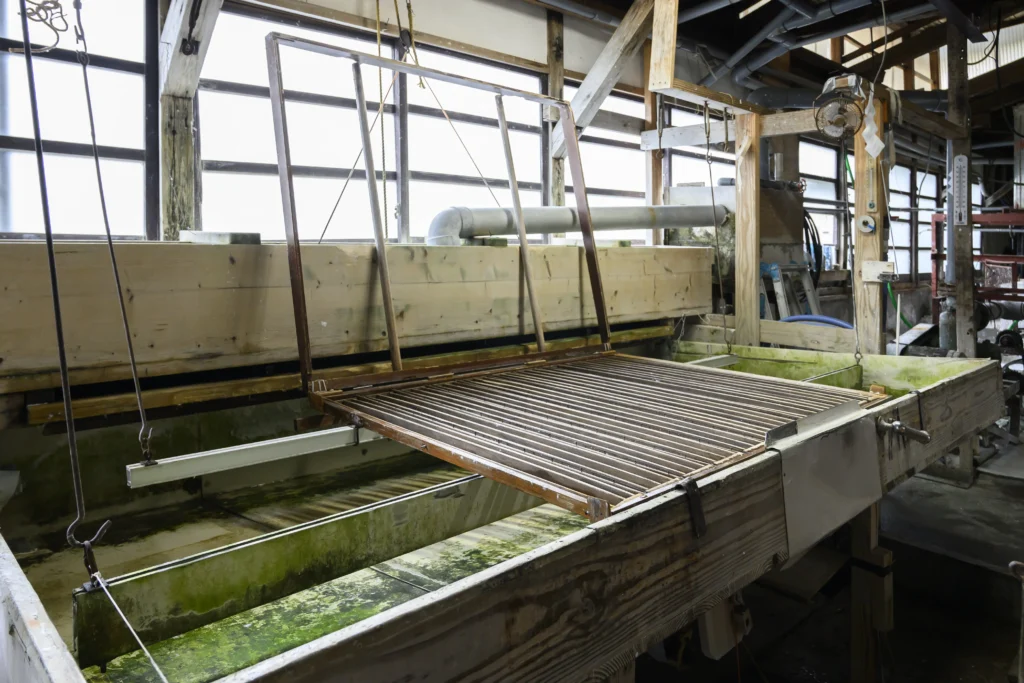
As sheet after sheet is formed by hand, the concentration of fibers in the papermaking vat gradually decreases.
For hand papermaking, where both high productivity and consistent paper quality are essential, this had long been a significant challenge.
My father addressed this by inventing the Seiko Simple Hand Papermaking System. With a press of a foot pedal, a measured amount of fresh pulp flows into the vat through a hatch at the front, automatically maintaining a constant fiber concentration throughout the process.
By always keeping the pulp mixture uniform, the system allows papermakers to produce every sheet with the consistent quality and craftsmanship they strive for.
After obtaining the patent, my father made the invention freely available to fellow papermakers in the local community rather than licensing it for profit. Over time, it spread far beyond Japan and is now used in papermaking workshops overseas.
When I visited a papermaking region in China, one craftsman said to me, “Thanks to your father, Mr. Kasai, we are able to make paper the way we do today.” Hearing those words in person was deeply moving.
The invention never generated income through patent royalties, but knowing that my father’s ingenuity continues to support papermaking around the world is a source of immense pride for our family.
— How did you become involved in producing Seed Paper®?
Kasai:
When I first took over the family business, we were extremely busy. Demand for our calligraphy paper was strong, and it seemed there would always be enough work to sustain us.
But as times changed, that demand gradually began to decline. Concerned about the future of Nishijima’s papermaking tradition, I realized we could no longer rely on conventional ideas alone. I began experimenting with new possibilities for washi, exploring ways to expand its role beyond its traditional uses.
Then one day, I received a phone call from Ms. Noguchi of SOUP Co., Ltd. She asked a simple question: “Could you make paper with seeds embedded in it?“
Her vision—transforming discarded office paper into handcrafted washi that would bloom into flowers—deeply resonated with me. I remember saying, “I’d be delighted to help,” and feeling genuinely excited by the challenge.
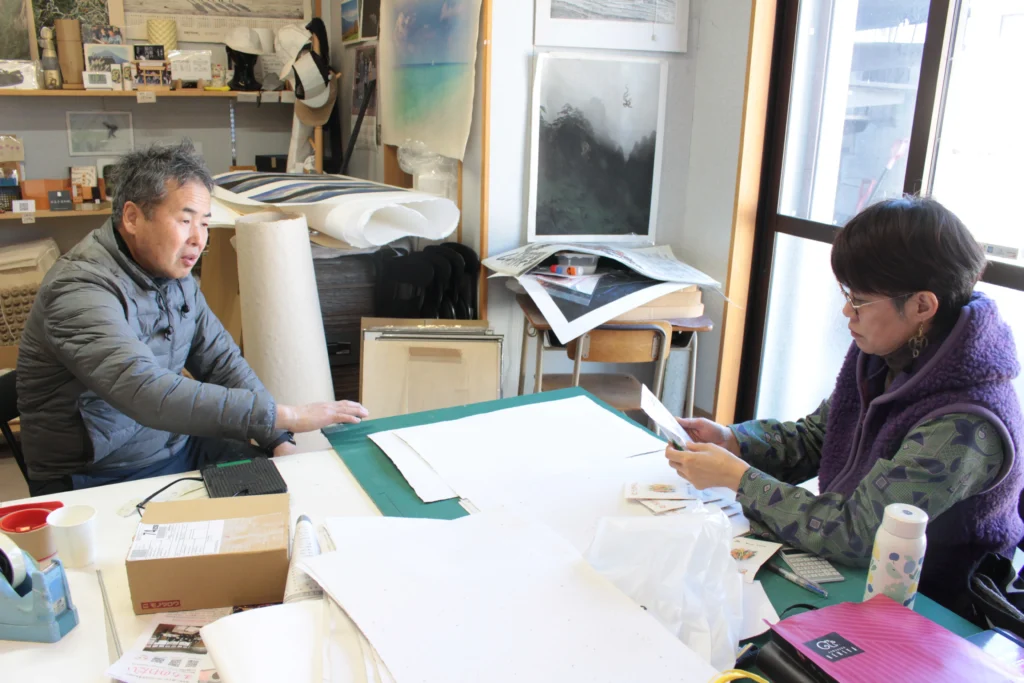
From that moment on, we worked side by side, overcoming one obstacle after another. Drawing on the intuition and craftsmanship developed over many years, we gradually refined the papermaking process until we achieved the quality we were seeking.
To see that handcrafted Seed Paper® has now become part of GREEN×EXPO 2027 is, for me as a papermaker, one of the greatest rewards I could have hoped for.
President, Yamaju Paper Co., Ltd.
Shinji Kasai
Born in 1956 in Nishijima, Minobu, Yamanashi Prefecture, he joined a paper wholesaler in Tokyo's Kanda district after graduating from university. After his father was injured, he returned to his hometown to carry on the family business as the thirteenth-generation successor of a long-established washi workshop.
After incorporating the business, he was appointed President of Yamaju Paper Co., Ltd. in 1997. In 2009, the company was recognized by Japan's Ministry of Economy, Trade and Industry as one of the "300 Vibrant Small and Medium-Sized Manufacturers." In 2017, Kasai himself was honored as a Master Craftsperson of Yamanashi (Yamanashi no Meikō).
While preserving the centuries-old tradition of Nishijima Washi, he continues to explore new possibilities for Japanese handmade paper that respond to the needs of the modern era.