
Inside Heroes
vol.4

Craft and Passion Shaping the “Landscape of Tomorrow”
A Message to Our Visitors
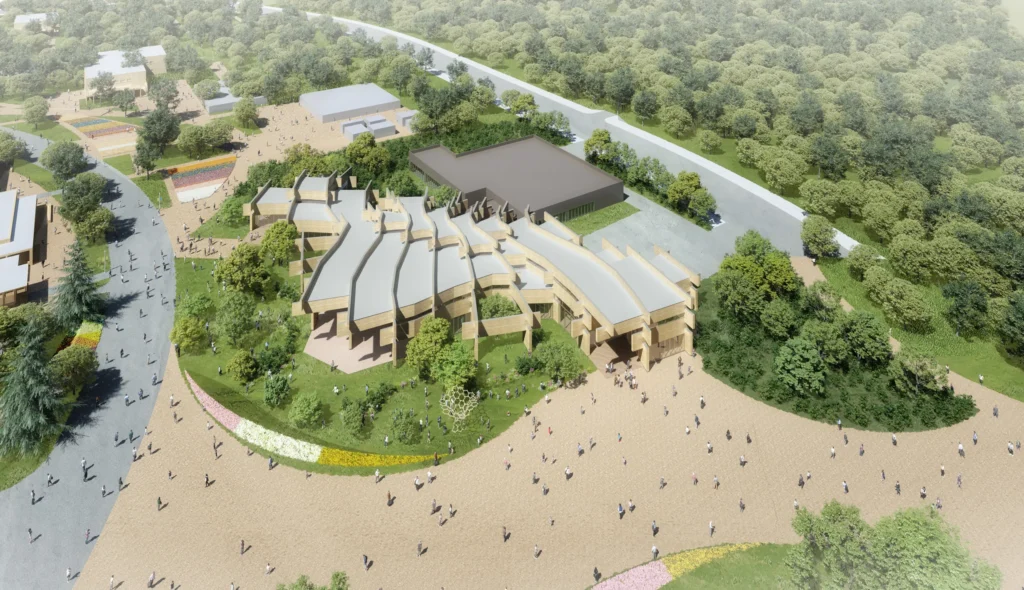
The Theme Pavilion stands as one of the defining symbols of the Expo.
The most distinctive feature lies in its intricate and original form—an assembly of interlocking timber elements that creates a dynamic and expressive spatial experience. The moment you step inside, you will be enveloped in the warmth of wood, while the architecture itself evokes anticipation for the exhibition it contains.
This is a space shaped by the skill and dedication of countless craftspeople.
We invite you to experience this “landscape of tomorrow”, brought into being through their craft and passion.
Strategy Drawn in the Sky, Composure Rooted on Site
— What do you value most in the field of making things?
Nakamura
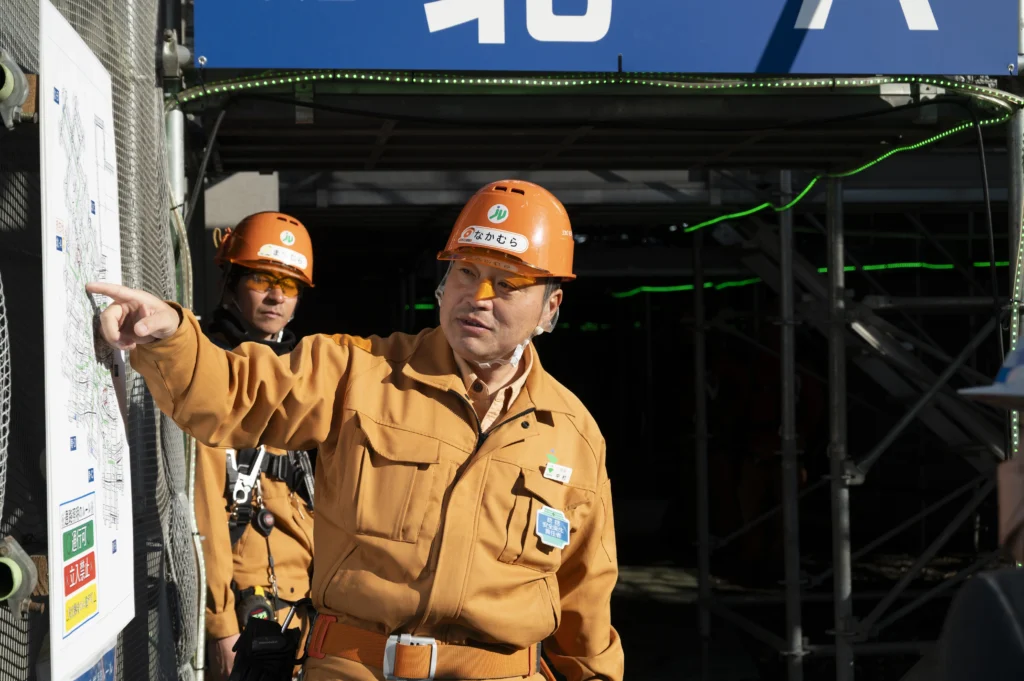
Over the past 25 years, I have primarily worked on high-rise construction projects. As a site director, my role is to coordinate the team of supervisors and oversee the entire operation. Delivering a high-quality building safely and within schedule is essential—but just as important is creating an environment in which every individual feels a sense of purpose and pride.
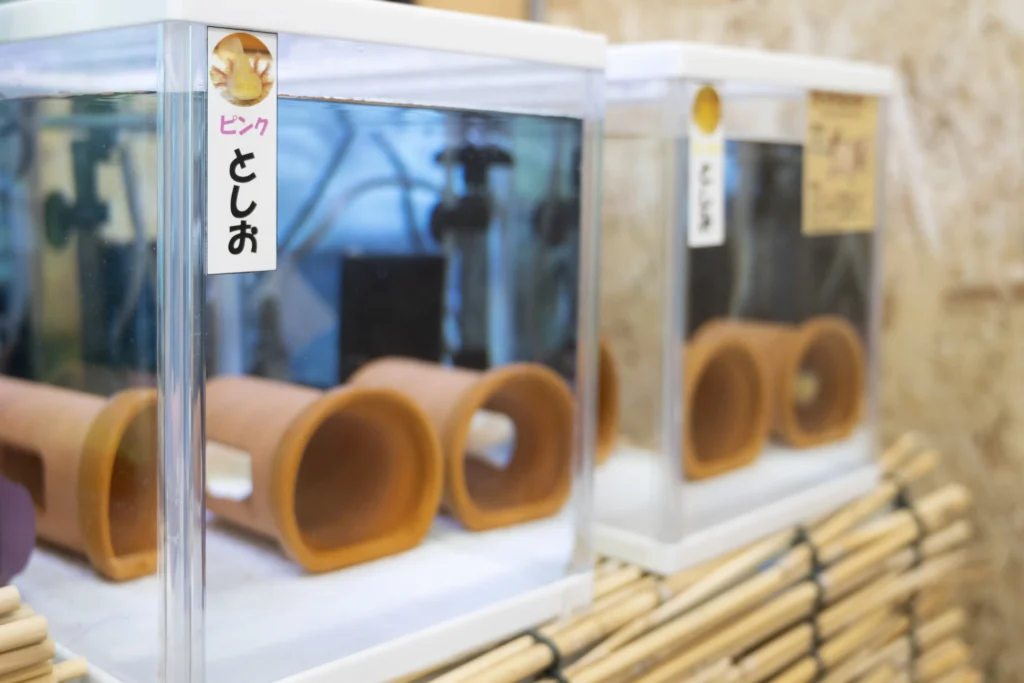
What may appear to be personal touches—playing background music in the site office, tending bonsai, even keeping an axolotl—are all part of this approach. These elements help create a sense of ease, which in turn allows us to remain attentive and focused across every aspect of the site.
We also hope that those who visit the site will come away with a renewed appreciation for the construction profession. To that end, we believe it is essential that we ourselves take genuine joy in the act of making.

— What led you to pursue a career in construction?
Nakamura
It began with a childhood fascination with tower cranes. Seeing them rise alongside buildings, I was captivated by their scale and movement. I wondered how such massive machines were dismantled once construction was complete.
The process, I later learned, was remarkably intricate.
A tower crane first assembles a slightly smaller crane. That crane is then used to dismantle the original. The process continues step by step, with progressively smaller cranes, until finally the smallest components are taken apart by hand and transported by elevator.
This “relay of dismantling,” unfolds the course of about three months, as the tower crane is taken apart step by step, revealed to me the depth and ingenuity of temporary construction planning, which became a decisive inspiration for my career.
A Challenge with No Margin for Error — Constructing a Monumental Puzzle
— This is your first experience with large-scale timber construction. What was your initial reaction?
Nakamura
To be honest, my first thought was: “Is this really possible?”
The key material in this project is CLT (Cross-Laminated Timber)—an engineered wood product composed of layered boards oriented in alternating directions. It offers both structural strength and environmental performance and is attracting attention as a next-generation building material.
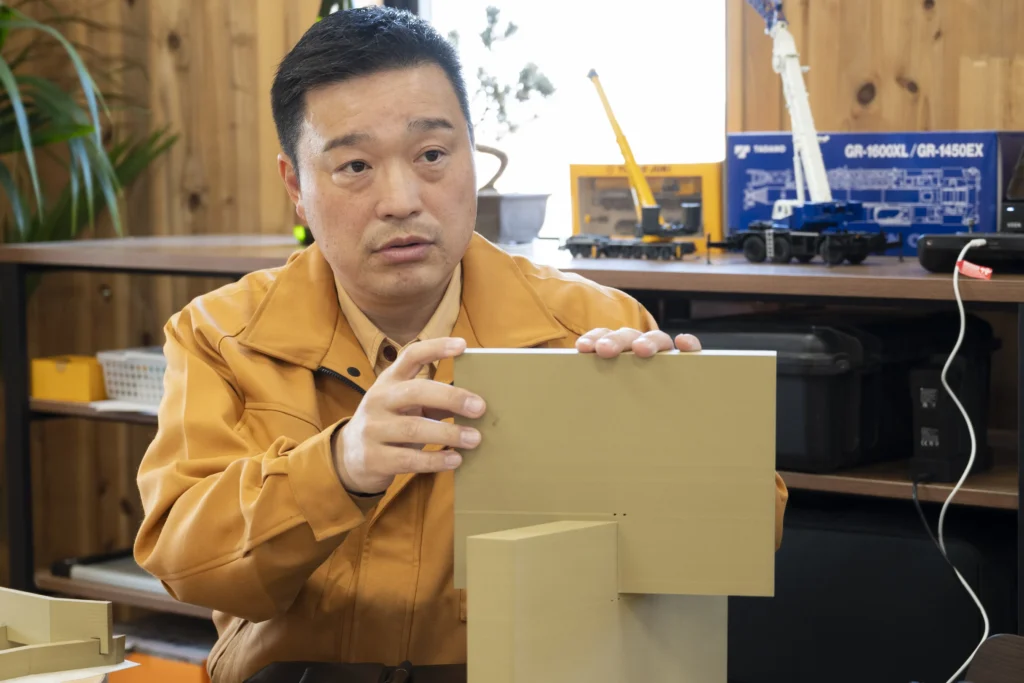
However, its application in the Theme Pavilion is highly unconventional. Most buildings are based on clear linear reference axes, but this structure has none. Instead, CLT panels must be assembled at irregular angles throughout the entire form.
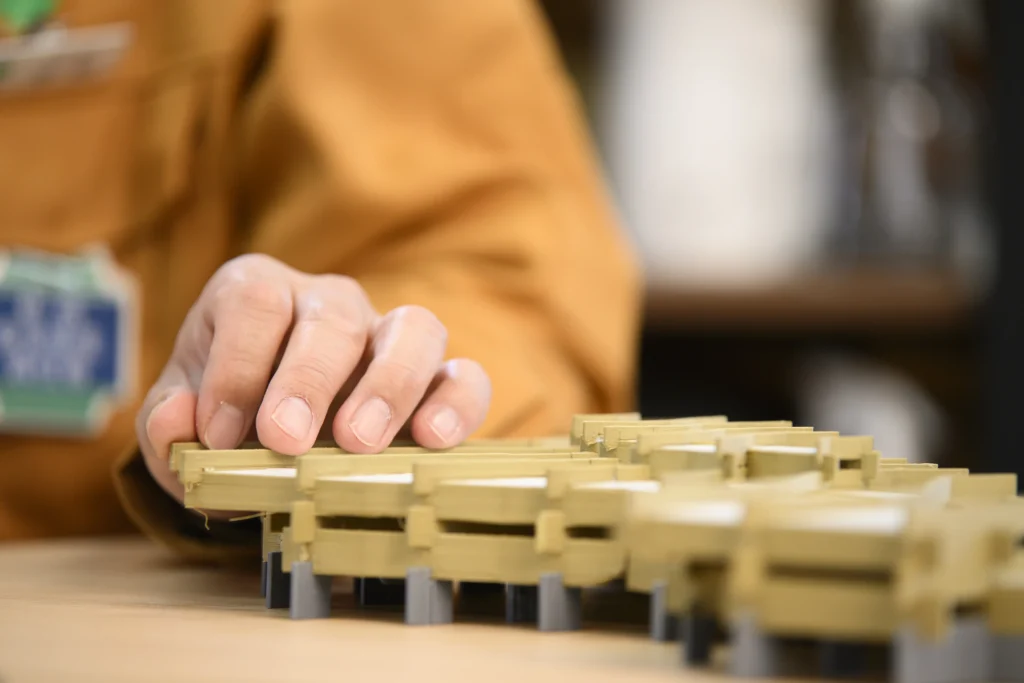
In typical construction, physical models are used to study assembly methods. In this case, we determined that such an approach would be insufficient. We began by creating models using 3D printing, carefully testing how to assemble the structure without deviation.
Plant, Harvest, Build — A 50-Year Cycle Sustaining Future Forests
— There seems to be a connection between the Expo’s theme and Obayashi’s approach to forestry. Could you elaborate?
Nakamura
Tree harvesting is often seen as environmental destruction. However, simply preserving forests is not enough to achieve decarbonization.
Trees absorb CO₂ most actively during their growth phase. As they mature, this capacity gradually declines. That is why we value a cyclical approach aligned with the life stages of trees.
Trees grown over 50 years are harvested and used as building materials in our cities. In their place, new saplings are planted and nurtured for the next 50 years. This cycle allows forests as a whole to maintain a consistently high capacity for carbon absorption.
The CLT used in this pavilion is part of that ongoing cycle of life.
The completion of a building is not the end, but rather a point within a much longer continuum—one that extends 50 or even 100 years into the future. If visitors come to see wooden architecture through this lens, we would consider that a meaningful outcome.
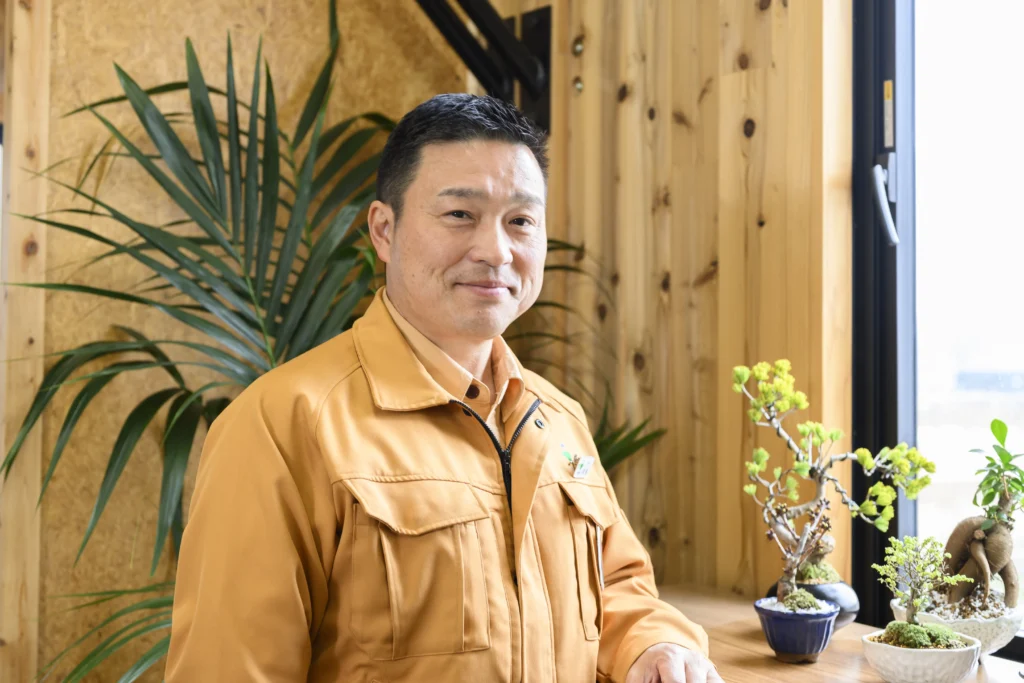
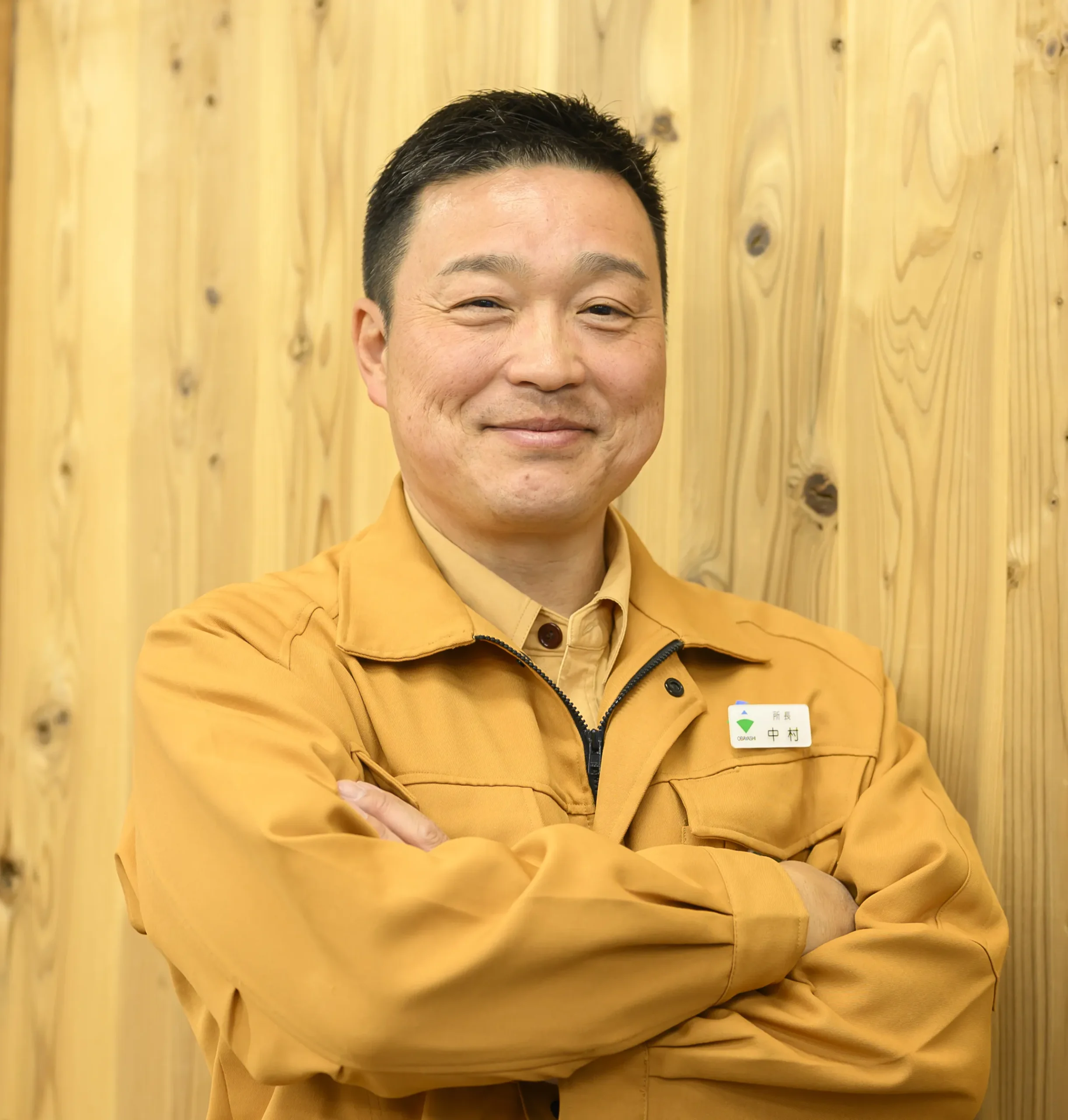
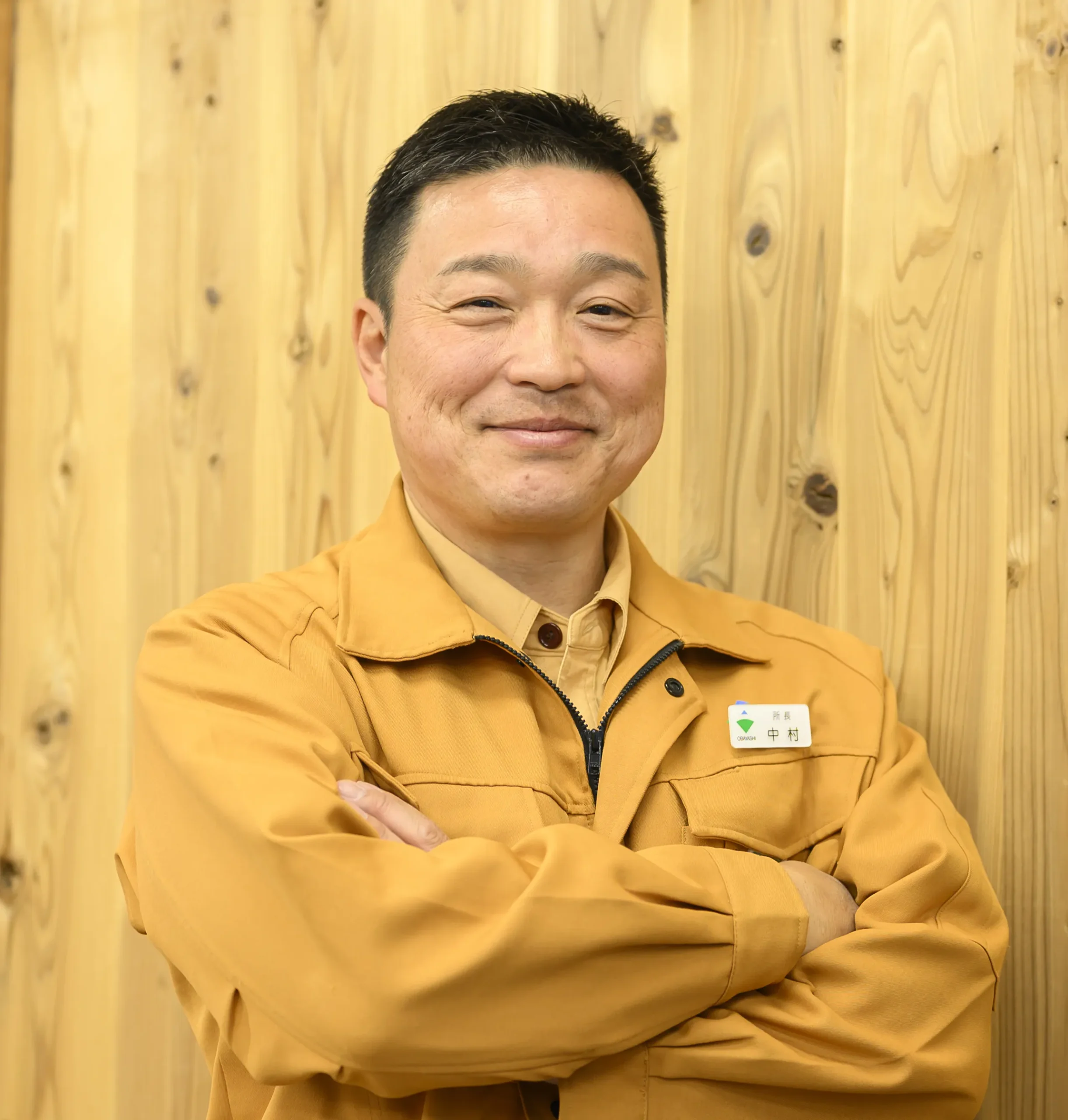
Site Director of the Themed Pavilion Construction Office
Shutaro Nakamura
Shutaro Nakamura joined Obayashi Corporation in 2000, where he has primarily been engaged in the construction of high-rise buildings. In 2005, he contributed to the construction of a corporate pavilion at the World Expo 2005 (Aichi, Japan).
He currently oversees the construction of a large-scale wooden structure that will serve as one of the symbolic landmarks of the International Horticultural Expo 2027 (Yokohama).
While pursuing construction precision to within ±1 millimetre, he is equally committed to fostering a work environment in which each individual can take pride and find meaning in their craft.