
Inside Heroes
vol.1

Seeking the Landscapes of Tomorrow
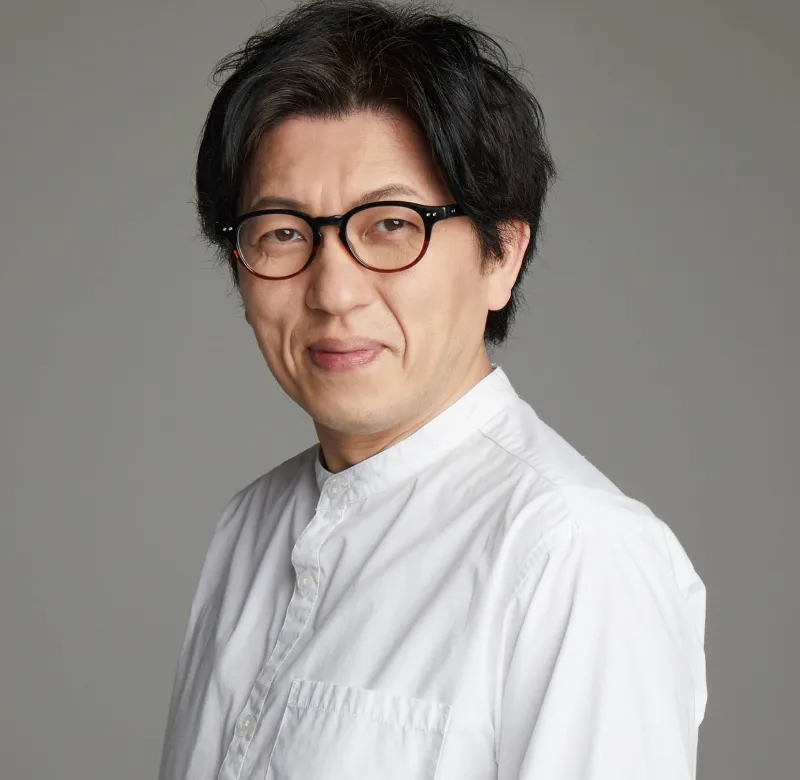
©LESLIE KEE
A Message to Our Visitors
The Theme Pavilion is founded on a simple yet profound idea:
All life is connected—with plants at its center.
Through experiences grounded in the latest scientific research, visitors are invited to explore the relationships linking plants to all forms of life on Earth, including our own.
Yet the experience is not meant to end within the pavilion. We hope that your visit will bring plants closer to your everyday life and inspire small, meaningful actions beyond this space. Each visitor will receive a piece of seed paper®—paper embedded with seeds. When planted at home, the seeds will begin to grow.
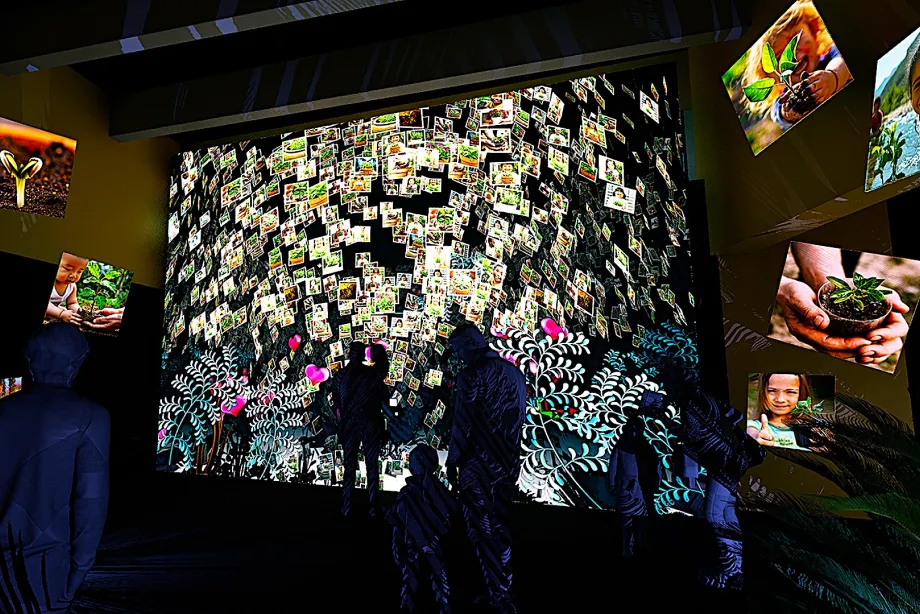
By sharing photographs of these plants as they sprout and flourish, they will become part of a living artwork connected to the exhibition. In this way, the work continues to evolve together with its participants. Through this shared and evolving experience, we hope to create a new “landscape of tomorrow”—together, beginning here in Yokohama.
The Origin of an ART + TECH Producer
— What does an “ART + TECH Producer” do?
Sugiyama
Simply put, my work is to create experiences that people can only have by visiting a particular place. Art raises new questions through free and imaginative expression. Technology gives form to those ideas through the latest innovations.
By bringing these two together, I call my role an ART + TECH Producer. In a world where efficiency often makes places look increasingly alike, I want to create destinations that people feel compelled to visit—even from afar. My role is to transform spaces themselves into works of art and to generate truly unique experiences.
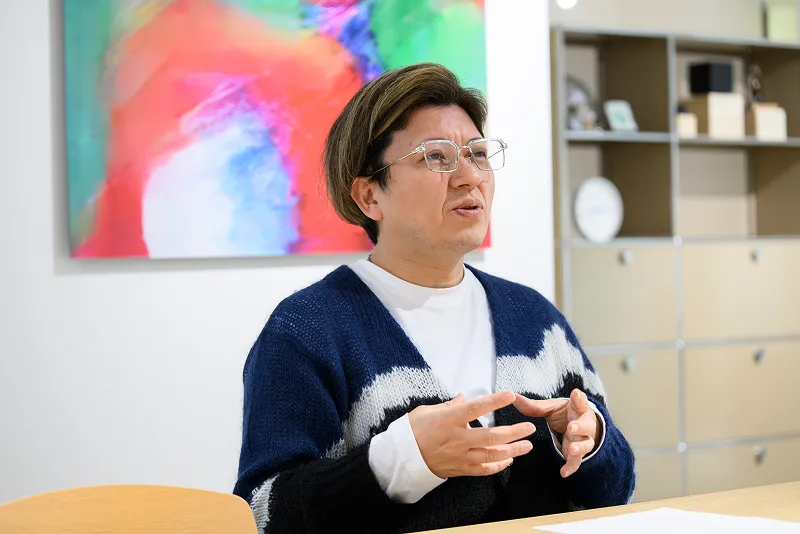
Photo: Bunsaku Nakagawa
— What inspired you to pursue this career?
Sugiyama
The starting point goes back to my grandfather, who was a painter. As a child, I watched him happily painting in his studio from morning until night, and I thought, what a wonderful profession an artist must be.
I also aspired to become an artist. During my student years, I carried out projects such as projecting videos onto city buildings, using urban space itself as a stage. However, altering public spaces freely is not permitted.
Through those experiences, I came to understand both the challenges of “free expression” and the immense talent required to stand alongside top artists. At that point, I shifted my perspective. I thought: if there are limits to expression, perhaps I should be the one who creates the space where expression can happen. By designing the environment itself, I could provide artists with a vast canvas to fully unleash their creativity. The excitement of filling an empty site with entirely new forms of expression remains the driving force behind my work today.
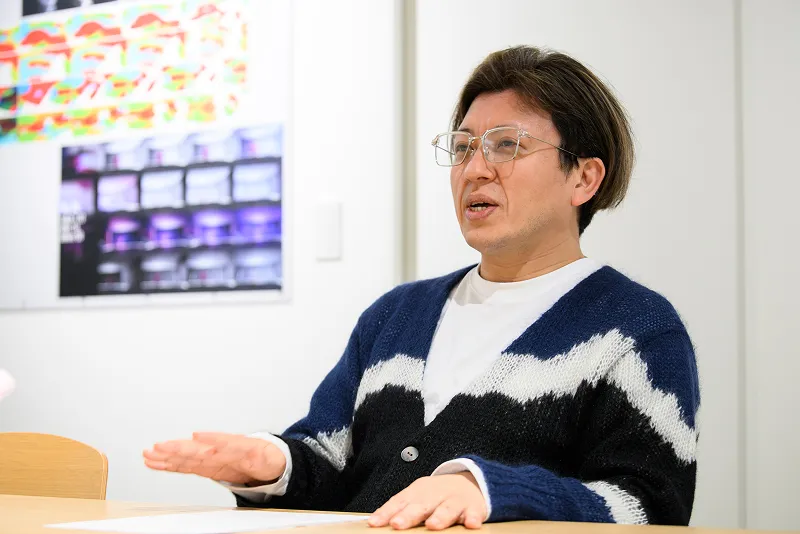
Photo: Bunsaku Nakagawa
— Which project became a major turning point in your career?
Sugiyama
A challenge that has consistently guided my work is how to liberate artistic expression from the two-dimensional world of screensand bring it into three-dimensional space. Within that trajectory, my experience at theExpo 2025 Osaka, Kansai, Japan,was particularly significant.
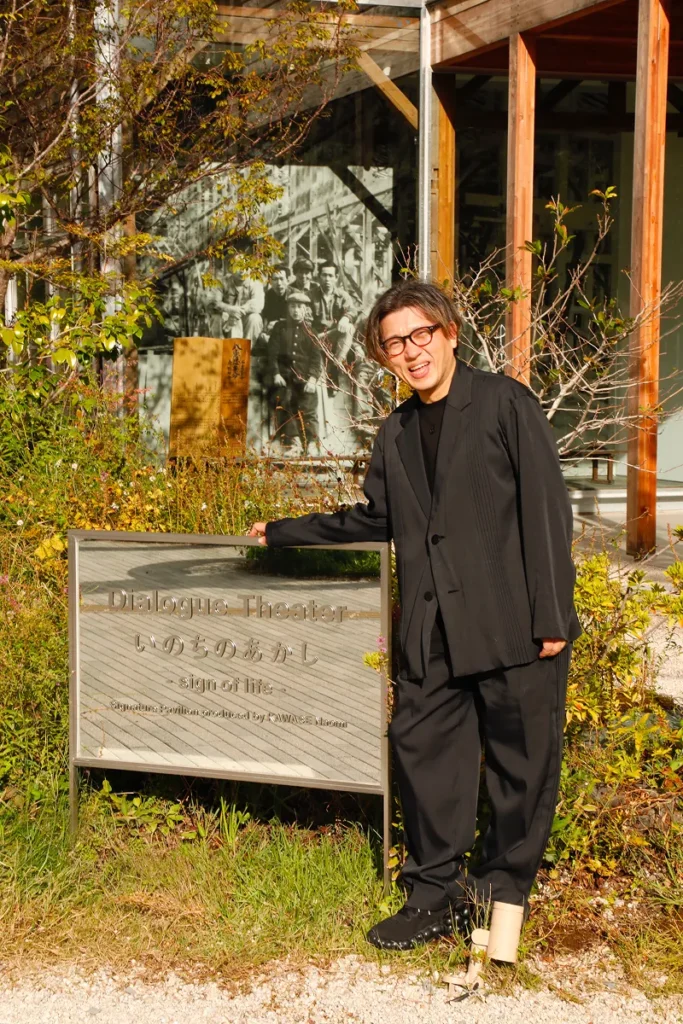
I worked alongside film director Naomi Kawase, the producer of the Signature Pavilion “INOCHI no Akashi.” As Chief Planning Director, I helped shape the project.
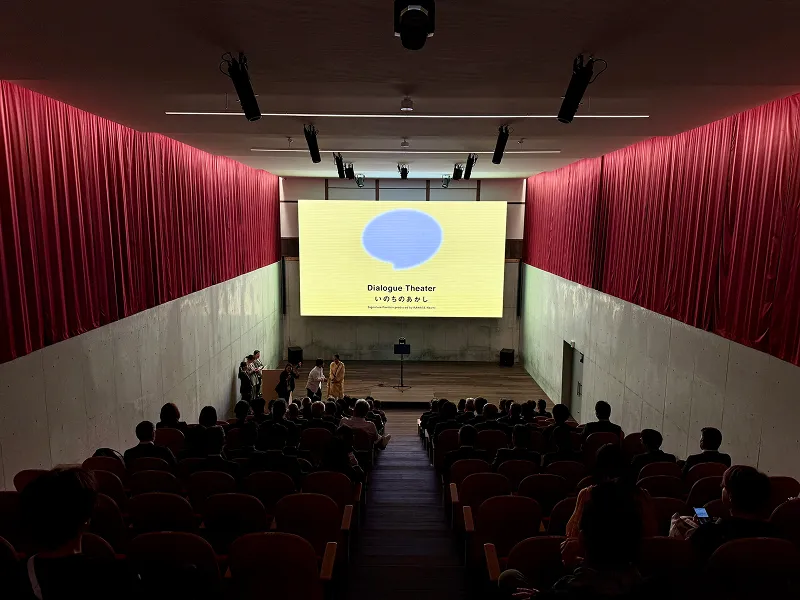
Expositions are often thought of as places where answers are presented. In our pavilion, however, we did not display objects. Instead, in a space resembling a cinema, one visitor in the venue and another person somewhere in the world would meet for the first time and engage in a ten-minute dialogue through the screen. What unfolded in real time was an uneditable documentary of human interaction.
At first, the participants were often nervous. Yet as they exchanged words, they gradually opened their hearts. The shifting atmosphere was shared by the audience, the speakers, and the staff alike—everyone holding their breath in the same space.
Over the course of the Expo, this program was conducted more than 1,500 times, and many visitors were moved to tears. It reaffirmed something profound: when people encounter real lives and genuine emotions, they are deeply moved. The Expo provided a powerful stage for that realization.
©LESLIE KEE
A New Challenge: GREEN × EXPO 2027
— What kind of exhibition are you aiming to create for GREEN × EXPO 2027?
Sugiyama
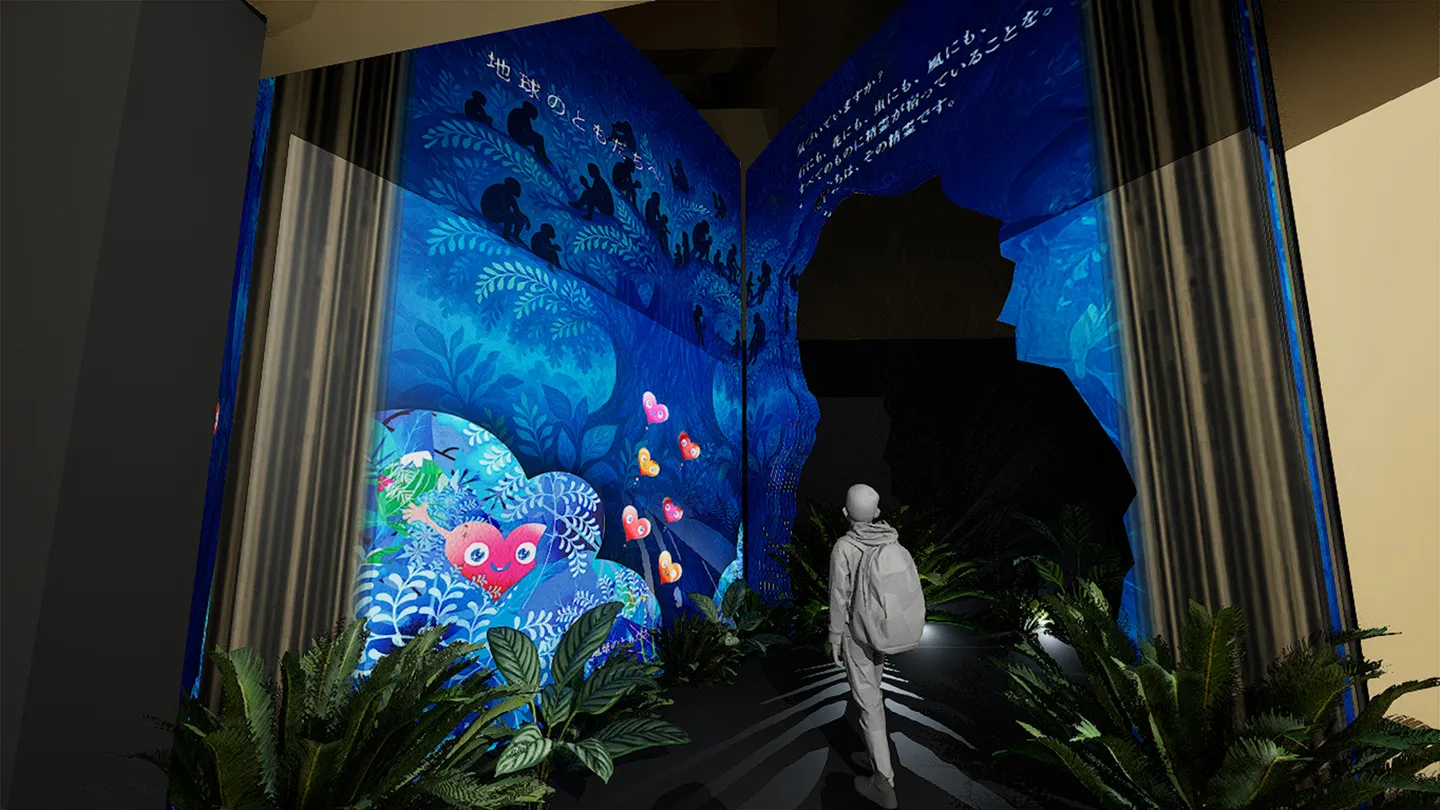
The central theme of the pavilion is: “All life is connected — with plants at the center.” We tend to view the world from a human-centered perspective. Yet the real world is sustained by countless other forms of life, particularly plants. Building on what I learned at the Osaka Expo about the power of authentic experiences, this pavilion invites visitors to encounter that interconnectedness through the lens of plants. If this experience encourages visitors to reflect on sustainability, even in small ways, we will have achieved something meaningful.
The exhibition will include immersive spaces that allow visitors to experience the hidden world beneath the soil, as well as visual installations that make the timescale of plants visible through advanced imaging technologies. These are experiences that can only be fully appreciated by being physically present at the venue. For this project, we are also collaborating with the NHK Groupto liberate the traditionally flat medium of television into spatial form. We hope visitors will feel the overwhelming experiential power created when imagery and space merge together.
©LESLIE KEE
CEO, Shinryoiki Inc. / Art + Tech Producer
Ou Sugiyama
Ou Sugiyama serves as Exhibition Director of the Theme Pavilion for the International Horticultural Expo 2027 (Yokohama), Chief Planning Director of the Signature Pavilion “INOCHI no Akashi” at Expo 2025 Osaka, Kansai, Japan, and General Director of TOKYO CREATIVE SALON 2026. Working at the intersection of art and technology, he develops new forms of spatial experience that merge creative expression, emerging technologies, and cultural environments.